The Venus Flytrap: The Westland Closure

I submit this column on Tuesdays. On Tuesday February 1, I had just sat at my desk when the shock news that the megaconglomerate Amazon had shut down Westland Books – a major Indian publisher, homegrown in Chennai over six decades and owned by Amazon for the last five years – came without a single warning. My two latest books (one barely a month old, one barely a year old) were released by this publisher. I didn’t write my column that day; a week later, I’m struggling to resume my usual rhythms. This holds true for hundreds of directly affected people. Despair reigns. The knowledge that our books (our babies!) will leave the market, become out of print, and that remaining copies will be physically destroyed has been completely shattering.

            Speculation is rife about how this closure happened at all, but what is not widely discussed is just how short a window of time remains for Westland titles to reach the market. The huge backlist will go out of print on February 28, with a deadline of February 15 for bookstores to order their final stock. The small frontlist goes out of print on March 31. March 15 is the presumed final order deadline, but may be sooner as the company and distributors navigate this unprecedented situation.

The size of and titles listed in these final orders depend purely on reader purchases right now. Bookstores will have to pay upfront; their lists will be smaller than most imagine. While books won’t be recalled – that is, if they aren’t returned first (due to e-commerce’s popularity, brick-and-mortar bookshops return stock regularly, which the author then has subtracted from her royalties) – they will be few and rare.

            Other than the importance of purchasing books urgently, there are some other things that readers need to know about this situation. For example: the date for last orders will likely also apply to libraries. Readers can convince institutions to bring books in, as well as personally donate Westland titles to community libraries. The Free Libraries Network (https://www.fln.org.in) is a good place to start.

            As for republication, the reality is that except in the event of a complete buyout of the entire catalogue, renewed life is simply not possible for every book. Even if a book finds a second publisher, it won’t re-enter the market until the new publisher honours their existing contracts, which could mean a year or two, especially with so many now jostling for room. Self-publishing is expensive and impractical; not all books work digitally either.

            The viscerality of pulping has horrified most authors and readers. Many ask: but why? It’s industry practice: unsold books are pulped regularly to clear warehouse space. Since a shuttered company can neither store nor legally sell its books, any that remain unhomed when all efforts are exhausted – including (hopefully) its own library donations – will suffer this fate.

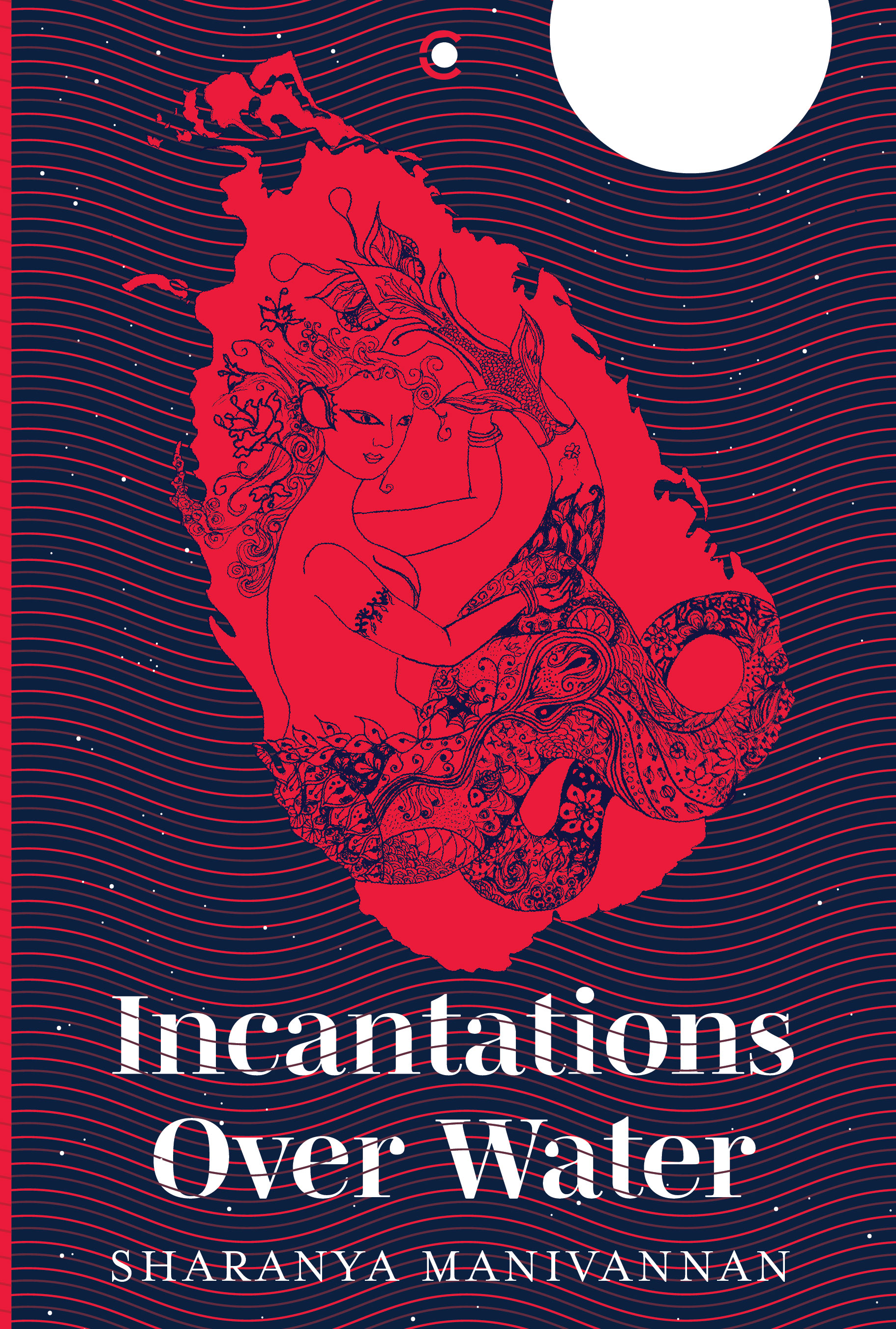
            I don’t want to imagine it, but sleeplessly grieving I do. I wonder if they’ll give me the ashes of my Incantations Over Water and Mermaids In The Moonlight, and some day those will be mingled with mine and immersed in the lagoon that we all came from…

An edited version appeared in The New Indian Express in February 2022. “The Venus Flytrap” appears in Chennai’s City Express supplement.
The Venus Flytrap: #MaritalStrike

Marital rape is legal in India, and it appears that it will continue to remain legal for a man to sexually assault his wife in this country, as the Centre appears to uphold regressive logic about the same despite ongoing efforts to criminalise. “Family issues”, “the dignity of a woman” and other such phrases have been used by the Centre as it buys more time from the Delhi High Court on a batch of related petitions that challenge existing law. Just prior to this development, the hashtag #MaritalStrike was trending online. The hashtag was used by men to declare that they would not get married if marital rape became a crime in India. A modern Lysistrata perhaps, but in reverse – where the protestors of the Greek play withheld sex on a pro-peace principle, these keyboard anti-heroes are decidedly pro-violence (and quite exaggerate their own desirability).

            Well, good riddance, yes. Indian society could only benefit if those would-be-rapists took themselves out of the matrimonial market and out of the gene pool too. But if only they could be taken at their word (or rather, their confession).

Months ago, I wrote in this column about Línea Calma, a Colombian hotline that supports men struggling with aspects of toxic masculinity. This brilliant initiative centres men’s responsibility in reducing harm. I wrote that no comparable Indian hotline exists, whereas misogynistic ones that claim to uphold the institution of family by supporting men with abuse cases lodged against them do. Several angry messages came my way after that piece was published, from Indian misogynists threatened by the fact that men in other countries were actively fighting patriarchy (and that a woman writing in an Indian newspaper drew more people’s attention to how poorly the Indian situation compared). No surprise then that the same anti-feminist network is behind #MaritalStrike. In a predictable move, they have since banned women from their organisation. Women with internalised misogyny issues who support anti-feminist men (they call themselves “men’s rights activists”, a misnomer) are no longer welcome in that circle.

Many have laughed these people off. I would like to as well, but can’t. I don’t think it’s funny that many of the would-be-rapists who have participated in #MaritalStrike will likely be married off by their families soon enough. They will marry women who will be raped. They’ve already declared, in public, that this is so important to them that they would rather not marry at all if their partner’s consent matters.

What would be amazing, though off-script for Indian patriarchy in the best way possible, is if participation in #MaritalStrike actually leads to engagements falling through. If families of prospective brides realise that the proposals on their hands are from would-be-rapists, and decline them. If families of would-be-rapists realise that their sons are menaces, and that they would be complicit in violence and abuse if they knowingly get them married – and don’t. Imagine it: the humiliating “Does she know how to sing?” at a bride-viewing being replaced by a “What are his/your views on #MaritalStrike?” instead. Just asking the question becomes a form of violence prevention – and if the law evolves sensibly, crime prevention too.

An edited version appeared in The New Indian Express in January 2022. “The Venus Flytrap” appears in Chennai’s City Express supplement.

The Venus Flytrap: Successful Divorces

Earlier this week, actor Dhanush K. Raja and producer Aishwaryaa Rajinikanth announced that they are getting divorced after eighteen years of marriage. This is the second high-profile divorce in the South Indian cinema field in recent times. Actors Samantha Ruth Prabhu and Akkineni Naga Chaitanya also announced their parting in late 2021.

            The individuals concerned have a right to privacy, and need not explain their decisions to the public. So, respectfully setting aside all subjectivities and intricacies, here is a more general perspective: high-profile divorces help normalise the pursuit of happiness and destigmatise leaving unhappiness behind, especially in places like India where marriage is imposed on the vast majority of people as both inevitable and inescapable.

            Any marriage can fall apart, regardless of the love or the infrastructure behind it. But in a country where marriages are mostly arranged, very rarely cross lines of caste, religion or class, and are considered sacrosanct in ways that allow all manner of inequalities and violence to exist unresolved within them, divorce is threatening to the social order. It threatens a social order that demands subservience, even if suffering is involved. This is exactly why divorce can be one of the keys to a better life. It isn’t for everyone – but neither is marriage.

The act of leaving requires finding a new blueprint on how to live – and possibly live better, too. There are many divorced people in India, and most of them aren’t celebrities, but some things are more clearly understood from a remove. This is why films and literature influence us where real life stories don’t always register. As for the real lives of celebrities, we aren’t entitled to information, but we can take inspiration. If speculation became introspection instead, it could be useful. Say, for example: if an unhappy couple or an unhappy person within an unhappy couple glances at a gossipy headline and contemplates a choice they too can make, something productive comes from what would otherwise be a moment of mere intrusion.

The interesting thing about celebrity-style divorce is that it is often PR-vetted, well-worded and presented as amicable. This too offers a new way of thinking about the process. This isn’t about how it looks to others as much as it is about how those within the process can experience it as something other than a failure. Even when it is one – even when the language that feels fair and accurate to describe an ending marriage counts it as a mistake or a failure, the language for what comes after it can be hopeful.

Life doesn’t always offer second chances, and to take one despite systemic pressure not to is brave. Without glorifying separation, we can see that it can be a beautiful thing to many – bringing new beginnings, freedom, greater peace of mind, self-renewal and more. Here’s to more people opting out, and opting for contentment. Here’s to supportive conditions that will let more people make this choice with less pain. As anyone trying to make their exit, or having successfully made their exit, will tell you: there is more than enough of that in a marriage that isn’t working, after all.

An edited version appeared in The New Indian Express in January 2022. “The Venus Flytrap” appears in Chennai’s City Express supplement.

The Venus Flytrap: Silos & Fortresses

Call them silos, echo chambers, the algorithm or well-curated interests, but more and more, venturing out from ours is hard. Partly by design, partly because doing so is simply bewildering.

Like many, I learned about the terms “trad” and “raita” because the founders of two bigoted apps that target Muslim women were identified as being part of the former group. Raitas are the kind of rightwing people that everyone in India knows well – we either are them, and if we are not, we most definitely have colleagues or family members or other close associates who are, or at the very least we have been attacked by them online. But it seems even they distance themselves from the trads, who are even more hardcore, and who in turn distinguish themselves from the raitas (whose name they coined, disparaging them as a kind of liberal too). One knows that political views are on a spectrum, but the extent of fundamentalism accepted and nurtured by young people on the rightwing side of it is alarming to learn.

Alishan Jafri and Naomi Barton’s in-depth analysis in The Wire, “Explained: ‘Trads’ vs ‘Raitas’ and the Inner Workings of India’s Alt-Right” which goes into detail about ideology, social media behavioural patterns and Nazi inspiration for trads, is highly recommended reading, especially if like me you are new to these terms. It’s important to know that these are not fringe elements, but are now mainstream – and will only continue to grow.

The idea that there are enough people out there for the trad ideology to have a name, and not just be a few stray extremists on the margins, is terrifying. The idea that there are so many people out there who think that the ruling party or its IT cell are not hard-hitting enough is terrifying. These aren’t just ideas, of course. The reality is that the nation’s moral rot is deeper than it’s bearable to imagine.

But imagine we must. I’ve been thinking about social researcher Brené Brown’s Braving The Wilderness, a book that largely focuses on the ways in which polarisation, siloisation and loneliness interact. Brown writes, “The sorting we do to ourselves and to one another is, at best, unintentional and reflexive. At worst, it is stereotyping that dehumanizes. The paradox is that we all love the ready-made filing system, so handy when we want to quickly characterize people, but we resent it when we’re the ones getting filed away.”

What this means in actual terms is that we can’t just balk in horror or further fortress ourselves away, but must be curious about how radicalisation happens, and how to reverse it. It is emotionally demanding to engage – that won’t change. It can also be a risk to well-being or to life – that, clearly, is going to intensify in this country. But the subtitle of Brown’s book offers a rumination. It is: The Quest For True Belonging And The Courage To Stand Alone. Those who align with hatred inevitably become devoured by it too. That is not true belonging. But those who stand alone stand also stand together, against a tide that will otherwise sweep us all away.

An edited version appeared in The New Indian Express in January 2022. “The Venus Flytrap” appears in Chennai’s City Express supplement.

INCANTATIONS OVER WATER

I am delighted to announce the publication of Incantations Over Water, my first graphic novel and seventh book. This book is the companion volume to my picture book Mermaids In The Moonlight; together they form my Ila duology.

“Sharanya Manivannan’s Incantations Over Water is storytelling magic — Ila the mermaid has an irresistible voice steeped in history, myth and pure wonder. Like its compelling narrator, this powerful book will call to you. A beautifully told and illustrated tale of the Kallady lagoon, and of the water that connects us all.” – V. V. Ganeshananthan

“Sharanya Manivannan’s storytelling is quicksilver, refusing — yet again — to be constrained by genre. Incantations Over Water is lyrical and experimental, invoking old lore, timeless sprites, and magic that isn’t of the obvious kind.” – Amruta Patil

An excerpt and exclusive video on News9.

An excerpt in Scroll.

An essay, “Making Up The Mermaid of Mattakalappu” in The Willowherb Review

An essay, “Ila, The Mermaid of Batticaloa” in Mermaids Monthly

“You could say that I had been working towards the Ila duology my whole life” – An interview with Suhasini Patni, Scroll

“…stunning lyricism leaping off its pages… gorgeously illustrated… Incantations over Water is an exploration about memory, home, loss, and the power of narratives. Densely researched and ecofeminist in its approach, the novel is an enthralling poetic and visual feat.” – Tasneem Pocketwala, OPEN Magazine

Incantations puts forth a knowledge that doesn’t have to be translated or, rather, can’t be translated — which is an act of intimacy telling us to know a people instead of simply extracting their wisdom. Diving beyond Western concepts of capturing and documenting information for posterity, it takes us to the deepest corners of the ocean of knowledge, where each story can have several meanings, making the whole beautiful and wondrous.” – Sneha Krishnan, The Hindu Literary Review

Incantations is a lyrical book, with prose that reads like poetry, and sentences that stay with you long after the pages are turned… Manivannan has illustrated the book herself, creating visuals of the lagoon and Ila that are beautiful and stirring.” – Joanna Lobo, Firstpost

“Her words and art have a hypnotic effect as they draw the readers into a world that is replete with ‘cultural history, eco-consciousness, political reality, and personal longing’. Magic surrealism meets glorious profundity, making this a novel that one would want to keep around for many years.” – Shrestha Saha, The Telegraph

Incantations Over Water demonstrates not only the literary excellence but also the genius of Sharanya Manivannan as an illustrator”.- Saurabh Sharma, Writerly Life

Incantations offers what you desire to draw from it and then some.” – Kannalmozhi Kabilan, The New Indian Express

…”the book is a visual delight due to its marvellous illustrations, (Manivannan’s pen has brought to life all the sea creatures, especially mermaids) as well as a treat to read, due to her poetic writing.” – Rachna Chhabria, Deccan Chronicle

“Sharanya Manivannan writes, ‘In any endeavour — in any pilgrimage, in any undertaking of the heart — always leave a votive for the ones who left no trace.’ This is what Sharanya does in her book ‘Incantations over water’. She acknowledges that this book is a votive for all her lost kin and for a history much less known.” – Pallavi NB, Deccan Herald

Virtual book launch with Karuna Ezara Parikh

A conversation with Anukrti Upadhyay for Pashyantee

A conversation with Cushy Book Club, University of Delhi

“I write and draw primarily for my own solace or pleasure” – an interview with Sukant Deepak, Indo-Asian News Service

An interview on “The Subverse”, the podcast of Dark ‘N’ Light

The Venus Flytrap: Imponderable

For the first time in what could be a long time, I brought the shutters down on the old year without reflecting on it, consciously rejecting a habit of contemplation and journaling – but perhaps still keeping some of the intentionality that the annual cusp usually contains for me. All I wanted, and still want, is to let 2021 go, and let go of all it took from me and all it demanded of me. To let go of my losses, to let go of the questions. But perhaps that, too, is a form of desire – the desire I took the step over this year’s threshold with. And not, of course, the only one.

The word “imponderable” – which I could choose to describe the previous year with, to describe my hesitation to appraise it – has an archaic meaning, according to one dictionary. It also means “very light”. The mul cotton lightness with which we must wear our experiences, our tragedies, our rearranged selves. The weight of my tread across this year’s threshold was necessarily then, in this sense, imponderable.

We stare at another cusp now, and have already crossed into another valley: the third wave of the COVID-19 pandemic is here in India. 

Another heart-sinking weight: the awareness that only those who were careful in the unprecedented first wave and the devastating second, and between these and since them, are going to care at all now. “Lightness, lightness,” I tell myself – “try to hold the knowledge that people don’t care lightly. About themselves, about each other, about you” – the last one twisted up in other knowledges, revelations the year that cannot quite be left behind had brought.

I brought this year in by myself in a borrowed house by a beach: writing, reading, cooking, watching TV, listening to music, healing. Staving off the sorrow with courage and the fear with curiosity. I pondered the question: is it necessary to have hope? Am I better served by taking a sombre, steady approach, letting each small step forward surprise and comfort me, treating each new attainment as miracle and celebration?

I am not alone in my sorrow and my fear, my courage and my curiosity. They are the companions of many, as this new year dawns.

I have not had other companions this week. But there has been the sound of the sea-waves, in a neighbourhood quiet enough to hear them. The dialogues of a frequently-meowing cat, and of frequently-fighting dogs. The other night, a man whom I assume was intoxicated was in the street, shouting at people. Everyone was out of sight; I was out of sight of them all. Except to the crows I observe and who observe me, whom I occasionally feed, and whom I look to for auguries amidst the uncertainty.

This, then, is a way to begin again. It is what I tell myself, reminding myself also that if I survive this pandemic – as I hope I will – there is less lonesomeness on the other side. There is camaraderie and comfort awaiting beyond. We will find each other again. In the meanwhile, we will make of these flows and ebbs what we will.

An edited version appeared in The New Indian Express on January 6th 2022. “The Venus Flytrap” appears  in Chennai’s City Express supplement.

The Venus Flytrap: Stay Wild, Sweet Child

This week, a Class 11 student died by suicide in Chennai, leaving a note for her mother that has since been circulated on social media. Written in a mix of Tamil, English and Romanised Tamil, the note clearly indicates that sexual abuse was a large motivating factor for the student’s action. In an angry, despairing tone, she called out schools, relatives and society for the pain they cause to women and girls. In one line, she wrote: “The only safe places are the graveyard and the mother’s womb.”

A minor public shockwave rose and will dissipate as quickly. This society – or to partially quote the note, “this [expletive] society” absorbs such tragedies with ease, and allows them to happen again and again.

She was all of 17 years old. She is gone, too soon, and the words here have no meaning to her. But I know there are so many like her, pushed to shattering points because of the many ways that a conservative society punishes them for even existing, let alone for resisting. One doesn’t have to be an iconoclast to suffer – the pressure of conformity chisels at the personhood, the freedoms and the joys of even the most “ordinary” of people.

So these words are for anyone who feels that way, no matter the particularities of your situation. They are especially for students and young adults. If you’re open to hearing from someone who is perhaps a couple of decades further down the path than you are now, this is what I want you to know.

Firstly, I won’t lie to you. You will never stop cursing this society, and your expletives will always be justified.

You will never stop encountering obstructions, even from unlikely quarters. Sometimes, they will break your heart or destabilise you. Other times, you will laugh, and write that person off. Count the victories. Use your bitterness like medicine, for that’s what it is. You will make a life for yourself not within these oppressions, but despite them.

Whenever you are boxed in, make it possible for yourself to reach into a deeper resource built from all the times you swam in the light and claimed it for yourself. When you are released from those boxes, even briefly, you will see that no part of who you are was lost, even when you had no choice, even when you just had to keep your head down, stay quiet, and work at what matters. Do those three things, diligently – with your eyes firmly on escape. Define what escape means for you.

All of this has happened to me over and over again, and probably always will – unless life gives me the beautiful opportunity to root myself in a nicer place. Which reminds me: you will keep evolving, but don’t count on this society to change. Its rot runs millennia deep. 

To experience our lives meaningfully we must resist, even so. Don’t believe anyone who says that getting along will make life easier. It will only make you chafe. It will make you unkind.

Choose kindness then. Choose to thrive on the margins. That’s where all the wildflowers are, lushly blooming.

An edited version appeared in The New Indian Express on December 28th 2021. “The Venus Flytrap” appears  in Chennai’s City Express supplement.

The Venus Flytrap: Failing The Feminism Exam

“What people were slow to observe was that the emancipation of the wife destroyed the parent’s authority over the children. The mother did not exemplify the obedience upon which she still tried to insist… In bringing the man down from his pedestal the wife and the mother deprived herself, in fact of the means of discipline.” These strange words do not belong in some moralistic novel from a few centuries ago, but from a comprehension passage in the English paper of the Class 10 board exam. The passage has since been withdrawn, with all students who were taking the exam given full marks for that section by default.

There were other passages in the same paper – on the same page was one which talked about how a wife who deferred to her husband would then be able to exert authority over others in a household (“Children and servants were taught in this way to know their place”), and one which bizarrely and ahistorically claimed that “In the twentieth century children became fewer and the feminist revolt was the result”. The section had eight questions in all, according to the leaked page. Perhaps there were more proclamations along this vein too.

The leaked page was brought to public attention through senior Opposition politicians, who condemned the misogynistic text and staged a Lok Sabha walkout to protest it. That the exam board acted swiftly and handled the issue without punishing students for their mistake is a good thing. At the same time, there remain some questions about how such a highly important text as a CBSE board exam could have been set in this manner at all, without internal checks and balances to keep it from happening.

Sometimes, people ask me how I come up with a new topic for this column every week. I tell them – “Something is always happening”. More often that not I mean: something upsetting is always happening. Something that wouldn’t have happened if incredibly basic rights, respect or common sense had been honoured or heeded. Sometimes, sadly, something that shouldn’t have happened. Sometimes, not sadly but not without distress, a thing like this: deep misogyny, garden variety really, on display by some twist or slip of bureaucratic processes, or some twist or slip of human behaviours.

“It’s nothing”, one can say, this particular “something”. No one suffered. All the students who were supposed to respond to those passages must have understood, through this public debacle, that those ideas and phrasings are objectionable.

But I wonder: is space now going to be held in classrooms and homes to talk about why they’re objectionable? Is this incident going to be properly utilised as a “teachable moment”, and if so, who leads these small-scale, sometimes quite private, conversations? What do they say across those desks and those dining tables, what cues do they take from contemporary society that influence their approach? Are they didactic, or do they hold space for slow but sincere learning, rage, confusion and more? That paper wasn’t set in a vacuum. It is not an anachronism. It reflects, unfortunately, thoughts that still prevail at large, shaping society, and all it comprises.

An edited version appeared in The New Indian Express on December 16th 2021. “The Venus Flytrap” appears  in Chennai’s City Express supplement.

The Venus Flytrap: The Evil Within Families

Earlier this week in Maharashtra, a 19-year old woman and her spouse visited her mother and her brother. They had been estranged ever since the woman had married of her own choosing in June. She was also pregnant. While she was in their kitchen, her 17-year old brother beheaded her with a sickle, with their mother urging him on. The deceased’s husband was able to flee. The murderers proceeded to take selfies with her severed head and paraded it for their neighbours, before being forced to surrender to police.

Occasionally, an event like this one erupts through the veneer of public gentility and appals everyone who hears of it. The tendency is to understand the event as anomalous, to express horror and disbelief that a brother would murder his sister, that a mother would encourage her son to kill her daughter, that family members would be so intoxicated by bloodlust that they would commemorate a murder by displaying the evidence.

But this perception of unusualness only feeds the factors that allow crimes like this to happen at all. By pretending that violence doesn’t happen on a continuum, and must be addressed much earlier on that continuum in order to prevent its more gruesome manifestations, society condones all of it on some level. The act itself may be extreme, and its ghastliness is shocking. But the impetus for it is so commonplace that it can quite accurately be just called “culture”. In this case and any like it, it is cultural norms that gave the criminals the belief that their actions were righteous.

Cultural norms that treat parental authority as being inalienable, women as being property, love as taboo, marriage as needing to happen only within certain clear parameters, and so on, create the belief within individuals that they are doing the right thing, even when they are actually acting in accordance with a sanctioned reality in which individuals behave as systemic agents and perpetuate grievous injustices – and justify them.

On the subject of reality, there is also this: one’s consciousness within an abusive household, family or relationship is often vastly distorted from what it would be within healthy circumstances. The deceased in the terrible case described above managed to physically flee her family, but the smallest avenue of access that they had to her was used against her, in the most vicious way imaginable. 

After she left, her mother and brother had remained firmly ensconced, if not also entrapped, within the poisonous reality of the beliefs that had made her elope in the first place. These beliefs are not only about grander ideas, such as a belief in the importance of caste perhaps, but play out in the very intimate – the belief that their victim was worthless. The woman and boy who killed their family member and felt triumphant about it acted out of a hatred that societal analysis alone cannot account for. That hatred belongs to a more arcane realm, the exploration of which begins with accepting these fact: the institution of family is not sacred, and the idea that home is a safe place is more of a privilege than we readily admit.

An edited version appeared in The New Indian Express on December 9th 2021. “The Venus Flytrap” appears  in Chennai’s City Express supplement.

The Venus Flytrap: Revenge And Relief

My friend looked sincerely distressed as she related what she had seen online: a Chennai-based woman had posted images of her battered face, alleging assault by her ex-boyfriend. She had also shared video evidence of him assaulting another person, and posted about emotional abuse and infidelity she had experienced. The woman identified her abuser, a champion bodybuilder and gym owner. My friend had come across the case at random, and had been following it closely.

“I need to see this guy taken down,” she said. She was aghast that despite the social media support the survivor received, real-world results seemed inconclusive. “What can we do?”

I asked her whether she thought the survivor’s intended outcome was fulfilled. We talked about how the vast majority of abuse goes unreported because the procedure is humiliating and harrowing, and due process, if it serves justice at all, is a long one. We talked about how the survivor herself may have gotten the closure she needed by going public with her experience and warning others. We talked about how little we really know about others’ lives, but how we are stoked or moved by incidents that enter public visibility because we project onto those incidents that which is unresolved in our own.

 “But the bad guy gets taken down in the end,” she asserted, with conviction.

The closest I’ve come to seeing karma in action was last week, when the cockroach I reached out to smash against the wall tile promptly fell into my blue tea on the stove, and was lovingly surrounded in death by butterfly pea flowers, now unpalatable. Serves me right for murdering it instead of engaging in a mindful tea-making ritual, I suppose. If karma has ever played out in the reverse direction in my life, I’ve certainly not been able to recognise it as that. Or perhaps the mechanism is more impersonal than that – our personal feelings, our need for vindication, are not relevant to a longer storyline that may be beyond our capacity to follow.

Still – righteous relief was writ large across my friend’s face only a few minutes after our conversation. We picked up our phones to look at the survivor and alleged perpetrator’s social media feeds and saw: just hours earlier, the latter had been arrested. For my friend and for everyone else who had been emotionally invested in the situation, this was great news. Hopefully, what happens next is just.

I don’t always know how to live with all that hasn’t healed or been avenged or at least been tidily tied up in the unravelling, fraying tapestry of my life. I don’t always know how to practice Rilke’s edict to “try to love the questions themselves”. In that exchange with my friend, I was the cynical one – but glad to be freed of my cynicism, even briefly. Even still, it was just the cheered look on my friend’s face that gave me that satisfaction, not even what was happening in the case that she cared deeply about. How idiosyncratic and particular our perception of the world really is, microscopically-focused and personally-influenced even as we think we speak of the world.

An edited version appeared in The New Indian Express on November 25th 2021. “The Venus Flytrap” appears  in Chennai’s City Express supplement.

The Venus Flytrap: Up Too Long

“If you’re down too long, people root for you. But if you’re ever unfortunate enough to be up too long, you better get a helmet.” The amazing Oprah Winfrey read out this excerpt from Will Smith’s new memoir, Will, while interviewing him on her talk show earlier this month. “Amen to that! Don’t we know that?!” she exclaimed after reading the passage, offering the actor a high five.

Winfrey is one of the great modern icons of resilience and joy-centred living, someone who beat tremendous odds to create a life of meaning and abundance – both of which she has visibly been generous with. If she gets envied for being successful, and criticised as a result of that envy, who can go unscathed? 

Some of such pettiness was on display when Falguni Nayar, founder of e-commerce giant Nykaa, made the company publicly-traded this month, becoming a billionaire in the process. As only the sixth Indian woman to achieve this status, and just the third who fulfils the criteria of being “self made” (prosperous without generational wealth), Nayar’s achievement is a rarity.

But how tongues wagged. There isn’t critique now as much as there is criticism. (Here’s valid critique: it’s been long-rumoured that Nykaa has an exploitative workplace environment). The criticism now is about privilege. Nayar founded Nykaa after having worked in the finance sector for decades; her spouse Sanjay Nayar is also successful in that field. USD 2 million of the couple’s savings went into establishing Nykaa in 2012. It’s a lot of money, sure, but they did earn it. The part no one wants to admit is this: if most of us were simply given USD 2 million, we wouldn’t be able to multiply it to a billion. (Maybe we wouldn’t want to? Different conversation.) That takes work ethic and business acumen that even the privileges of education, networks or high income cannot buy. Appreciating that Nayar had and utilised both, even while critiquing labour practices and capitalism, is just giving credit where it’s due.

Most people cannot do the things that the people they criticise do. They kind of know it, too (cue: extra vitriol). But much of the time, they don’t even make the attempt. Forget bank accounts: do they put their hearts on the line?

Fear keeps us small. Frustration with ourselves for not pursuing our desires masks itself as high standards, performative principles or just being too-cool-to-care. I had a friend who wanted to create, but wouldn’t. She happened to have known Arundhati Roy in school. Once, after relating some personal gossip about Roy, she sniffed and said, “I expected better from her.” Literarily speaking, that is. I wasn’t sure what “better” than writing a contemporary masterpiece was. Eventually, pouncing at a low moment, she tried to coax me to “grow up” and quit writing. I lost touch with her then. I wouldn’t be surprised to hear if she’s scrunching her nose up about me now and again too. But I’d rather hear that she’s finally creating the work she always longed to, instead of wasting her precious time side-eyeing others as they flounder or fly (but always, either way, try).

An edited version appeared in The New Indian Express on November 19th 2021. “The Venus Flytrap” appears  in Chennai’s City Express supplement.

The Venus Flytrap: Tulsi Gowda

Honestly, it was her gorgeous outfit that I noticed first. I won’t pretend to have known who she was and even to have long been a fan (as many do when major awards are announced!). No, I confess under-informedness. When Tulsi Gowda, the 77-year old environmentalist from Honnali, Karnataka, walked up to the President of India, Ram Nath Kovind, to accept her Padma Shri award for a lifetime’s dedicated to forest conservation, I admired her beauty first, and only after Googling her could I also admire her work. 

She wore the traditional attire of her Halakki Vokkalu culture. Her black checked saree, with a red border and gold zari work, was wrapped in a sarong-style that allows ease of movement, with twists that leave the back and shoulders bare for more comfort. Around her neck, layers of many-beaded necklaces accentuated the halter-neck drape. She was barefoot at the awards ceremony, and perhaps often if not always is.

Sadly, in India, appreciating someone’s style is almost never simply a happy-making moment. I wish I could have just admired Gowda’s powerful presence, enhanced by her striking garments and accessories, and enjoyed learning more about her work later. Instead, a couple of small pebbles of rue also rolled around in my heart.

Firstly, and not flippantly: the same moral police that hasn’t blinked an eye at what they surely perceive as being merely the rustic apparel of an elderly tribal woman would be up in arms if a younger woman had appeared in a backless saree at a state event. Forget public ceremonies – the stalking and abuse that women with online presences experience constantly says enough. Of late, there has also been a visible increase in policing around traditionally feminine ornaments. The withdrawn Saybasachi ad in which a model wore a mangalsutra in a low-cut blouse and the campaign to boycott brands that put out Diwali advertising in which the women featured did not wear bindis are indicators of this. The saree, as a similarly emblematic article of clothing, would not escape such scrutiny. But much depends on who is gazing. It’s never actually about the object, but about who wields it.

Secondly, and relatedly: context. There’s no controversy about Gowda’s apparel because her context doesn’t threaten the sensitivities of the establishment (or its minions) – but neither does she. All great public recognitions also come with invisible undercurrents: everything from internal politics, funding agendas, PR exercises and more. That doesn’t make recipients undeserving (well… sometimes it does). In Padma Shri Tulsi Gowda’s case, even as we celebrate her achievement, we must see it in its larger context, which is ominous. Here is just one example: India’s coal shortage, which indigenous and non-indigenous activists have correlated with the Government of India’s support for mega-corporations like Adani, Vedanta and Jindal appropriating forest reserves for mining. According to Survival International, 80% of new mines will be on what are or were Adivasi lands. What does it mean to honour one indigenous environmentalist against such a backdrop, in which the lands, waters and skies are being desecrated, and in which many more activists for Nature or for human rights are consistently silenced?

An edited version appeared in The New Indian Express on November 11th 2021. “The Venus Flytrap” appears  in Chennai’s City Express supplement.