The Venus Flytrap: An Undelivered Message

“Sometime during the course of the year, when the time is nigh and right, you’ll receive a message.” A week into 2016, this intriguing email arrived in my inbox. It was from a friend who is a diviner, but what she offered was not a prophecy. I was among those handpicked for “a very special experiment”, a safekeeping of notes to ourselves. My message would come from no mystery other than my own desire to speak to myself. Its dispatch date was not to be of my choosing.

This is what I told her to keep safe for me, in those early days of a year that started just as unhappily as it continued: “You did the right thing. You picked the right path. You really did.”

It’s not that I was at any particular crossroads at the time. In many ways, it was a strange message to send myself, and not at all what I needed for what I could see of the year to come. I had known at the outset that mine was to be a year of patience, not of radical decisions. Even the good things that were to happen would not come from anything other than long, hard work.

Here’s what I can say with hindsight: such a vague message could come only from someone out of touch with her intuition.

And I was.

The months unrolled; less like a red carpet and more like apples from a broken carton, slipshod and mostly beyond grasping. I spent most of them waiting. I waited for my manuscripts to be turned into proofs and then to be turned into books. I waited to get away and then to get back home. I waited for things to be over with. I waited to feel better. I waited for the other shoe to drop.

And all along, at the back of my mind, as the year grew longer and my ability to tap into my own heart dimmed more and more, I waited for the validation of that stored message. No crossroad I encountered asked of me anything other than the intuitive, yet I struggled with giving myself permission.

The message never came.

Did my friend abandon her project, or did the right moment for that message simply not arrive? I haven’t asked her; instead, I’ve pondered the second question. With or without design, the non-appearance of that time capsule dispatch was probably more valuable to me than its actual content. Especially in the closing few weeks of the last year, when I began to wonder what had happened to it, and so began to have to contemplate the message itself.

After all, if it was only something I was telling myself, why did I require another person to deliver it, or to remind me of it? Perhaps this deceptively simple realisation, rather than the empty validation of a self-doubting message, was what I had truly needed.

What would your message to yourself be, if you too embarked on such an introspection? I’m eschewing a time capsule for a more everyday message: trust yourself, trust yourself, trust yourself. Let’s just hope that I’ll listen.

An edited version appeared in The New Indian Express on January 5th 2017. “The Venus Flytrap” appears on Thursdays in Chennai’s City Express supplement.
The Venus Flytrap: On The Cusp Of A New Year

Here is a story about patriarchy, faith and the passing of time. Many decades ago, when my grandfather was a Marxist, he would not allow altars or rituals in his spaces. My grandmother wrangled a concession in the one place in the household that belonged unequivocally to her. Each year, a new tearaway baby Murugan calendar would find its corner in her kitchen. And each day, she would place a flower on the sill of pages, until the year thinned enough that she had to affix it to the cardboard shrine in some other way.

As this year dwindles to a close, many are pinning great hopes on the one to come. Not because there is anything to look forward to, but because this calendar year seems to have been measured in more upsetting things on a public scale than usual. But humankind is selfish: there is no way that celebrity demises and political disruptions alone have created this atmosphere. That means that events in the theatre of the world have allowed for camouflaged expressions of private burdens and distress. By participating in collective performances of dismay, putting terrorism and pop culture on a near-even scale, one conveys emotions from a personal sphere that don’t necessarily get an airing otherwise.

It’s self-perpetuating: dissatisfaction leads us to seek validation from social media, and social media protocol demands constant opinionating on current affairs. My theory is that we appear to care more than we used to. My hope is that we actually do.

I’m not thinking about the year to come; I’m casting myself halfway into the last century, where my grandmother buys a fresh tearaway calendar for her contraband prayer alcove. She measured her lived years in pain and endurance, as do you and I. But she saw far into the future, which is why time after time I reach far into the past to find her anchoring.

The truth is that next year isn’t going to be radically different, because some of the upheaval we’ve experienced will cause permanent damage. The annals of history are replete with evidence, and the cycles of the present offer nothing new under the sun.

How dare we be so naïve? And how dare we distance ourselves from the fact that we co-created and contribute to this collapsing world, with its mutilated environment and scarcities of compassion and common sense?

For some years now, I’ve been meeting all celebratory occasions very quietly. That might be why that synecdochic piece of family history – about a calendar in a kitchen, my grandmother’s act of resistance in the years when her way of seeing the world had little place in its grander milieu – is on my mind now. This is the world we have inherited, whether we measure being in it in years or months or only by the ages we ourselves turn. It doesn’t have to be the world we leave behind. We must begin – again – to tend to the vision. Begin with a little self-carved stakehold. A corner so sovereign that no one can touch it. And quietly quotidian acts of faith and revolution, among the wilting blooms and crumpled pages.

An edited version appeared in The New Indian Express on December 29th 2016. “The Venus Flytrap” appears on Thursdays in Chennai’s City Express supplement.
The Venus Flytrap: Koi No Yokan And Kintsugi

What marvels do the languages we’ll never know contain, what things would they tell us about ourselves if only we knew how to decipher them? Sometimes there are feelings I have that calcify inside me until, years later, a comet of words will set them free like a kiss in a fairytale. What if the words that will give me back to myself are ones I will not even understand?

Those lists of beautiful and supposedly untranslatable words are like too many macaroons at once. I’m not sure such delicate turns of phrase are meant to be gorged that way, instead of being savoured. I encountered one of them, unaccompanied, the other day – and perhaps because it was alone, among lines and not in lists, it arrested me. I mused over it slowly. This was the phrase, from the Japanese language: koi no yokan. The presentiment upon meeting someone that, eventually, you will fall in love with them. But not yet.

The last time I had that sense, I had held on to the possibility like the fact of the moon: full in rarer moments, obscured in most. Sometimes the probability of love took me far, literally. Sometimes I forgot about it. Once or twice, it ambushed me, and I would find myself bawling, as though a claypot I didn’t know was in my hands was suddenly in shards on the floor. All in all, let me say this: what was never promised but expected to be eventual was more inspiring than disappointing. Perhaps some glimpses of love yet to come, intuitions that hold true for only as long as morning dew on a leaf, are meant only to do that much.

The last time I really loved someone, I didn’t have a clue that it would come to pass for the year and a half in which I had known him peripherally, before he suddenly came into view like an aperture of sight or imagination had been adjusted. I never saw it coming, and sifting through memory later, I was humbled by the intricacy of life’s convolutions, how something only a short distance away had never shimmered at me with sweet allusion, or cast its spectral foreshadow.

Although here’s what I suspect and may never be told the truth about: he knew before I did. He’d had that presentiment, and if he had known the Japanese words, he may have known what to call it.

There are other words now to fill the gap that cannot be bridged. I know some of them. Others hover outside my comprehension.

Mulling over koi no yokan, I remembered that where that early recognition had caused me pain had actually always been only in platonic friendships. Their loss scars me far deeper than amorous disillusionment. I’ve matured into a tendency to see romance as transient in ways that I refuse to presume, even now, of friendship. I spent all of this year recovering from two friendships that failed my faith in them.

Again, and always, another Japanese word: kintsugi. The art of fixing what’s broken with gold, which hides neither its beauty nor the reason for its need.

An edited version appeared in The New Indian Express on December 22nd 2016. “The Venus Flytrap” appears on Thursdays in Chennai’s City Express supplement.
The Venus Flytrap: Flood And Drought

That night, the full moon visited the Pleaides after the cyclone had crossed. All was calm again, and in the absence of artificial brightness I took a single clay lamp to my room to mark the occasion. To reinforce the rattling doors of my balcony, which had already invited a deluge in earlier that day, a decorative item – an altar of steps – that had been stored outside had been brought in. The steps served their purpose as they done hadn’t in a while. They held up that little lamp, its reflection steady against the closed glass door. And I sat for as long as it blazed in the quiet, storm-strewn twilight, and poems came back to me.

So that the next morning, still utterly disconnected from any form of communication, I woke unto poems. I tried to be sensible. I thought of my deadlines first, the people who couldn’t reach me. I thought of all the things that would catch up with me the minute the networks started working again. But I could no more stem the torrents of poetry than I could the rainwater that had seeped beneath and between those balcony doors and creased the pages of the books I had left stacked on the floor.

I write to you pretending to be in another century, envious of writers who predated the Internet, or who were born early enough that they didn’t become usurped by it. What bliss, to wake up in the aftermath of a storm to filthy floors and untallied damages and find myself just as calm as the climate, cossetted in fresh poems. Is this what happens to me when I have so little static around me, when there are no tweets to click on or messages to attend to, when I can’t squander hours in idle browsing, cheating myself that I’m trying to find something interesting to write about?

Will the power come back on in time for me to send you this missive? Even the most ambitious of writers past didn’t have the conceit of today’s. They didn’t know if their manuscripts would survive ordinary accidents, sabotage, and finally, the postal system. But – unlike I have all year, except for the boon of this column – they wrote anyway. And trusted.

I could not raise potted plants this year, after the last ones I’d tended to died in last December’s floods. It was not that I was so attached to those ones that I couldn’t try again. Just that the keeping of plants is an indicator of heart-health. And mine was very small and stony and sad this year. In the interim, other forces took over my balcony: laundry, pigeons, storage, an altar that got its swansong on Karthigai Deepam.

The cyclone was the final coup in my efforts to reclaim the space. Now it stands completely empty, and full of potential. Will I dare to do it: to trust again? I will measure my capacity by beginning with things with thorns: bougainvillea, roses and cacti. Perhaps I only know how to parse the world in metaphor. But isn’t that too a way to look it in the eye?

An edited version appeared in The New Indian Express on December 8th 2016. “The Venus Flytrap” appears on Thursdays in Chennai’s City Express supplement.

The Venus Flytrap: For The Women Who Weren’t Born Men

Maybe they don’t know everything, the women with the divining sticks, but they sure know how to reel a girl in. Maybe they don’t see everything, but they do see you there on the beach, alone or in some laidback configuration, and somehow – they see enough.

And so they come up to you as you’re rolling your jeans up or dusting your bum off, scrunching the newspaper your sundal came in and absentmindedly considering whether to litter, trash or recycle. And they look you in the eyes with a smile of recognition and say: “Nee ambulaiya poranthirikanum, ma!” You should have been born a man.

Even later, when you find out that there’s nothing unique about this line, you will consider it a compliment, because it is meant as one.

And the shore-side soothsayer will offer you this opening gambit as she takes your palm, because whatever else she knows or doesn’t, she can intuit you aren’t going to take it as an insult.

Though later, you learn: some women who do terrible things to other women have been told it too. Other women who do worse things to themselves have been told it too. Are those also ways to be men, then? “Internalised misogyny,” you think. Women who should have been born men because maybe then they would hate themselves, and each other, less.

Even later, when you bristle and say, “Well, if I lived somewhere else, was steeped in better societal conditioning, desexing me wouldn’t feel like a compliment.”

But you don’t live anywhere but here. You live here in this city by the sea. With a long beach where you could be detained for holding hands at night. And by the brightness of day, you give yourself away because only someone who doesn’t mind sun-kissed skin would be loitering. Someone like you, a woman like a man.

Count them and see how few they are, the women. How far between the canoodling (straight) couples and the water-shy families. While half-naked men splash around like they own this city, or indeed, this sea.

“Should have been born a man”, you ponder – and you look at the transwomen who also mill about between stalls selling blackened corn and displaying balloons to shoot for prizes. And you wonder what the fortune-tellers say to them, though you don’t quite know how to ask.

And not yet, not today, but soon – you may wander along that beach and arrive at the memorial of another woman who “should have been born a man”. And you’ll think of the crowds of men in white who surrounded her, and all the women still in their kitchens, whose lives she made a little easier.

At first, when you were younger, you thought that all that the fortune-tellers meant with that provocative, alluring opening gambit was this: that you have courage in excess, a province you demurred was not exclusively male. Later you understood: if you were a man, in this place and in this time, what you could do with that courage would have multiplied. Or to put it another way, perhaps you wouldn’t have needed that much courage at all.

An edited version appeared in The New Indian Express on December 8th 2016. “The Venus Flytrap” appears on Thursdays in Chennai’s City Express supplement.

The Venus Flytrap: Postcards And Silences

Last Friday, the feminist thinktank Prajnya held an event called “Letterbox of Resistance”, part of its 16 Days campaign against gender violence. At different spots in the city through the day, volunteers wrote postcards and letters by hand, to be mailed off to people, organisations and institutions to which we had something to say.

But what did I have to say? I stared at my postcards. My mind was just like them: blank, but prettily doodled.

It was unnerving, after endlessly attempting dialogue and insisting in its usage as a radical force, to be confronted by my own silence.

Not loaded silence. Not withheld words, just their sheer absence. Given the opportunity to distantly but directly address someone and give them a message, I found myself struggling to think of who might benefit from this interesting form of intervention. I took cues from others at the table. So I wrote to the Nadigar Sangam about misogyny in Tamil cinema, but not to specific actors. I attempted a pro-intersectionality message to the seat of power in New Delhi but between instinctive apprehension and educated cynicism, it flopped. I applauded those who wrote to kids they knew, but couldn’t think of anyone whose parents would appreciate my preaching to them. I thought about my own family – in fact, one of my friends addressed a postcard to a relative of mine, who badly needs some schooling in kindness – but still came up blank. So much for being the one with a way with words!

Years ago, when I had read Aamer Hussein’s epistolary short story, “Nine Postcards From Sanlucar de Barrameda”, its luminosity had led me intoxicated to my own rendering, and an inspired series poured out of me. Postcards that could not be sent, as the story will tell you if you read it, because their intended recipient did not care at all, for them or for me. Instead, I wrote each one and emailed it off to a friend. There were nine, for Hussein’s were a map (mine osculated the Pondicherry border). They contained lines from Basho and things I didn’t even know yet were true, memories, questions, and the sum of what it means to be sentient to an abandonment before it has cicatrised into amalgamated trauma. It became the first story I finished writing for what became my book that’s on shelves now.

I thought of those postcards that could only ever be received too late, whose intended address had changed over the years, from deceiver to rightful receiver (that would be you, my dear reader), and how passionately I’d penned them. While straightforward messages about a cause I care about so deeply eluded me. It was a lesson update in humility: expression is one thing, communication is another.

One last Letterbox of Resistance postcard sat before me. I’d stared at it for over an hour, doodling and crayoning it idly as I reflected on what my inarticulateness meant.

In the end, I sent that last postcard as a note of gratitude, and a surprise. It was meant to uplift not just the addressee, but also – after all this voice-raising and silence-swallowing – me.

An edited version appeared in The New Indian Express on December 1st 2016. “The Venus Flytrap” appears on Thursdays in Chennai’s City Express supplement.

The Venus Flytrap: What’s Gratitude Got To Do With Genocide?

So America has copied India, and if that makes you happy, feel free to use my sour grapes to make faux champagne. The imitation remains mutual, though. India – or more precisely, cashless, digital, desensitised India – now celebrates Thanksgiving, a North American festival with a history its name completely belies. I noticed it last year, in personal status messages and corporate sales promotions, and the trend continues.  It falls today.

For some reason, many people seem to think that Thanksgiving is a day when you express gratitude. For, I don’t know, having PayTM, credit cards and god-bless-Amazon-India? For being the first to get exclusive UNESCO-certified Whatsapp forwards? Alright, maybe I’m being uncharitable (see sour grapes from earlier). Some sincere, well-intentioned, but sadly ill-informed people seem to think Thanksgiving is a day to be appreciative of one’s good luck and myriad blessings.

But its North American observance, memorializing an autumn harvest feast shared by Puritan colonisers and Native Americans, is also a fictitious lustre on facts. To be exact, it’s nationalist propaganda. The first Thanksgiving of 1637 celebrated a massacre of 700 Pequot people. Native Americans were probably not seated at that table. Among what followed and preceded were: the Trail of Tears, smallpox as warfare, stolen lands, systematic slaughter and too much more.

Reading beyond skewed history textbooks, we know that Columbus sought a direct sea route to Asia. His poor navigation skills opened the Americas up for exploitation over the coming centuries. So when you observe the festival in India, what are you saying thanks for: that it wasn’t your ancestors, just someone else’s?

The Native Americans who survive to this day – whose voices I seek to neither represent nor appropriate – as well as all who were wiped out, with or without descendants, deserve more respect than that.

Distantly, we hear of the resistance against a pipeline that violates sacred Sioux grounds at Standing Rock, where water cannons and mace are blasted at unarmed protestors, who were even locked into cages and attacked by dogs. Distantly, we read of how even as these events unfolded, Obama was posthumously awarding a Presidential Medal of Freedom to Elouise Cobell, who successfully litigated against the United States government in the largest class action lawsuit in its history, for mismanagement of funds and lands leased from Native American nations. Such dissonance, between the things we are told and the things we know to be true. And still, so very distantly, we type out “Happy Thanksgiving! So grateful for all the good things in life yo!” as though nothing is connected, as though the history of human survival is not twinned by the history of human carnage.

Don’t celebrate Thanksgiving. Your “good intentions” don’t bring back the cultures that are lost forever, or revive the ones that are under threat. Your “good intentions” don’t keep human rights violations from happening to this very day. Hell, your “good intentions” haven’t even solved the riddle of how India sends missions to Mars but hasn’t invented tools that replace manual scavenging with bare hands, right here in our own backyards.

And as for gratitude? What’s genocide got to do with it?

An edited version appeared in The New Indian Express on November 24th. “The Venus Flytrap” appears on Thursdays in Chennai’s City Express supplement.

Turtlewalking Through The Night

“Little is known about the lives of turtles underwater, but this much has long been understood: Where a turtle hatches is where she comes back to nest, a dozen or so years later. In the nearly three decades of the SSTCN’s work, Venkatramanan estimates that 2,50,000 eggs have been transferred from the beaches to the hatcheries, of which 2,00,000 hatchlings have been released into the sea.”

Read my piece on turtlewalking in Chennai, and the increasingly threatened marine ecosystem, in Hindustan Times.

Interview With R. Vatsala

“When I am asked, do you only write about women and families? I say: what is there is the outside world that is not there in the family? The deifying of families must end; they are made up only of individuals. We have not yet found a better system, but if we are to continue with this one, we must accept that the nucleus of equality or inequality begins within it.”

Read my piece on iconoclastic Tamil writer R. Vatsala on Scroll.

Love, Freedom, Solitude & Consequence

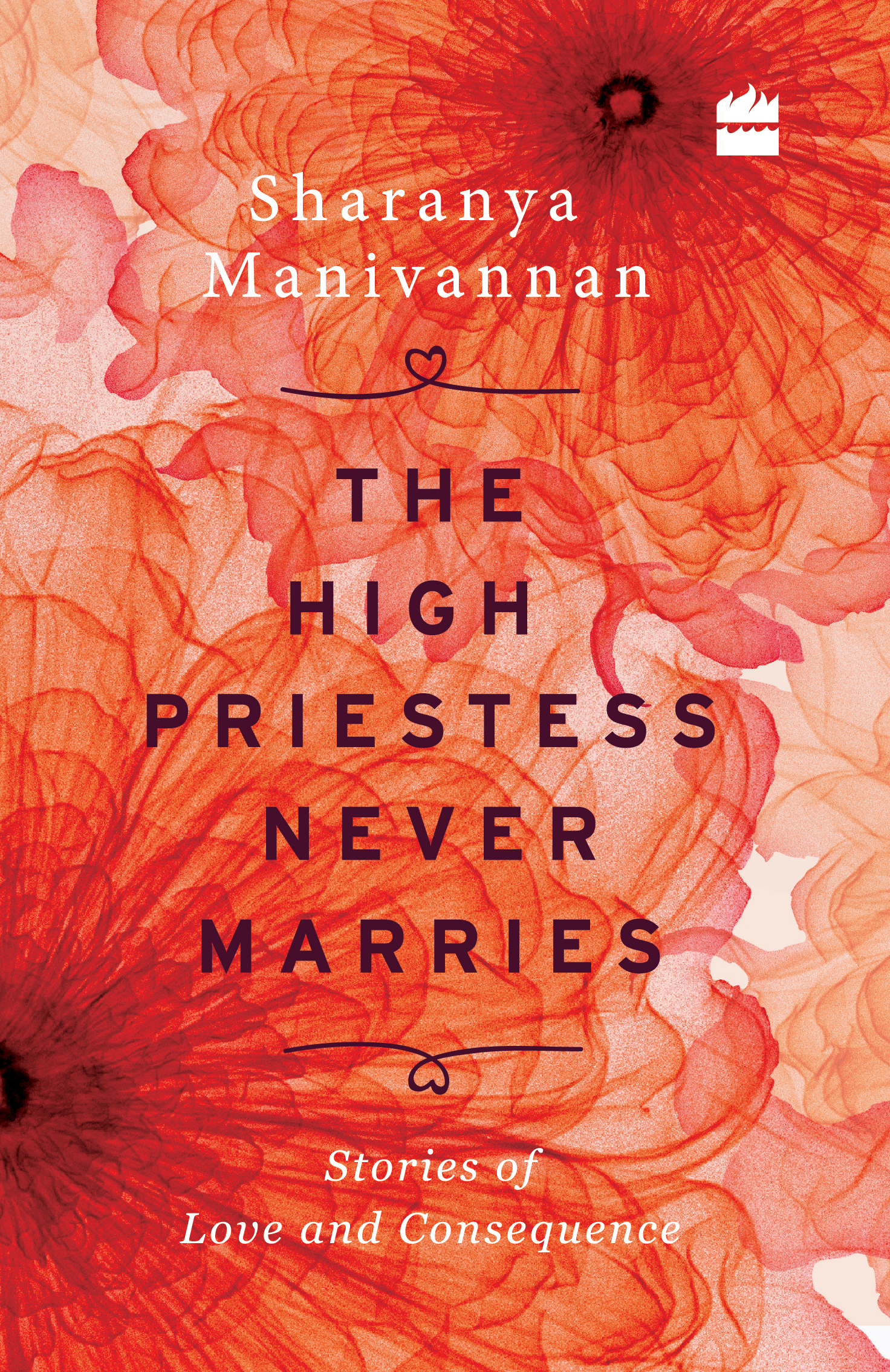
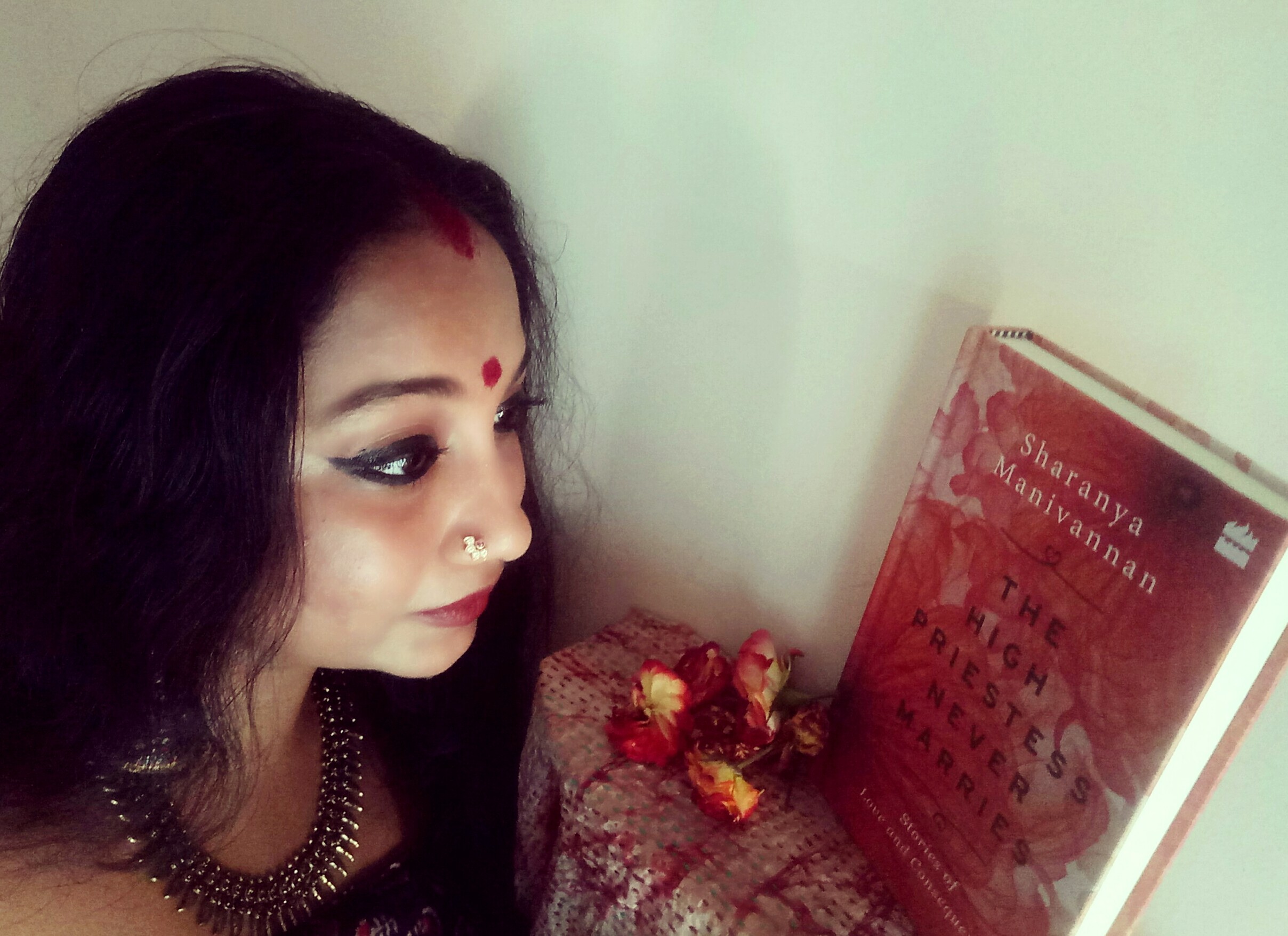
When negotiating the delicate balance between aloneness and isolation, these lines from Jane Hirshfield’s poem “Vinegar and Oil” waft back to me – “Wrong solitude vinegars the soul,/ right solitude oils it. // How fragile we are, between the few good moments.” There are ways to reject the institution of marriage without having to deny the emotional impact of giving up social legitimacy, protection and – indeed – companionship. That’s the reason why my new book of short stories, The High Priestess Never Marries, is subtitled as follows: Stories of Love and Consequence.

There are consequences to loving, there are consequences to pretending to be in love, there are consequences to leaving, there are consequences to pretending to not want love. No matter who you are, you must negotiate these.

These are the consequences that the intelligent, and often very brave, women in my book of stories confront. They are women who, if you asked them, would say “bachelorette” is an andro-centric diminutive; reclaiming “spinster” is a stronger statement. They are widows. They are adulterers. They are lovers, they are losers, they are leavers, they are seekers.

The institution of marriage is profoundly problematic, deeply patriarchal in nature. To be a feminist is to necessarily challenge it. In India, for instance, we know that statistically speaking, women are leaving the workforce at an unprecedented rate (participation stands at just 27%, even compared to 37% a decade ago) – which means that a woman’s passions and ambitions, no matter her achievements or education level, are simply sublimated into the system. We know that only 5% of marriages are inter-caste, which means that even in so-called “love marriages”, the fundamental function of the institution as a means to perpetuate hierarchical systems remains virtually intact. We know that marital rape is not recognised by law, incontrovertible proof of the idea that a woman, and by extension her body, become the property of the household into which she marries. These are not uniquely Indian problems. It is not a coincidence that the English word “husband” is of agricultural origin: a wife was among the possessions he managed on his property.

It must be possible to challenge the system from within it, and some of the characters in my book try to, through transgressions and interrogations. But to not be within it affords its own agency, even as it strips a woman of privileges as varied as not being regarded as morally bankrupt to the literal, physical security of a companion to walk dark streets with (a companion who, if questioned by the equally patriarchal law enforcement system, can validate the relationship where a woman’s word alone has no currency). And it’s those women – the loners and non-conformists, who largely fill the pages of this book.

Autonomy may be stained with fear, but it is pervaded by freedom. It is in this freedom that the characters in The High Priestess Never Marries play, pray, push the envelope and prise their own hearts open continuously. They dive into the myths. They trek into the mountains. They dip their paintbrushes into the palettes of their lives. They serve their hearts on a platter, seasoned to perfection. They weep into the sea. They have lovers’ tiffs with the moon. They copulate with trees and devote themselves to deities. They keep very still. They sing. They sigh. They say No, they say Never, they say Not Now – they say Yes Yes Yes O Yes.

They fall. But how they fly.

(An edited version appeared on Bonobology.com)

~ THE HIGH PRIESTESS NEVER MARRIES ~

The High Priestess Never Marries

A Sri Lankan mermaid laments the Arthurian Fisher King; a woman treks to a cliff in the Nilgiris with honey gatherers of the Irula tribe; a painter fears she will lose her sanity if she leaves her marriage and lose her art if she stays faithful within it; one woman marries her goddess; another, sitting in a bar, says to herself, ‘I like my fights dirty, my vodka neat and my romance anachronistic.’The women in this collection are choice makers, consequence facers, solitude seekers. They are lovers, vixens, wives to themselves. And their stories are just how that woman in the bar likes it – dirty, neat and sexy as smoke.

Selected reviews, interviews & articles

“A formidable debut” – Aditya Mani Jha, The Hindu Business Line

“Manivannan’s language has desire written into its very bones, from its simplest forms to a more complex reenactment of the power play between men and women. Sensuality judders through each story and each encounter is rendered erotic through its sharp intensity and temporariness. Hers is a liquid prose that flows from one vignette to the next. The words are limpid pools of passion and pain filled with portents of despair, palli doshams and other untranslatable astral signs. It is the perfect tongue for these high priestesses, poetesses, goddesses, and the vixen who love and live according to their own terms.” – Diya Kohli, Open Magazine

The High Priestess Never Marries is a tour de force of language, desire, and ancestral heartbeats.” – Richa Kaul Padte, The Establishment

“This collection of short stories by Sharanya Manivannan claims to set forth stories of love and consequence. To agree with her would be unfair, for her stories are so much more. They are my secrets and desires in written form, picked unknowingly from my body and mind, given back to me in a manner so exquisite that is almost painful to contemplate.” – Anusha Srinivasan, amuse-douche (republished in The Madras Mag)

The sheer power and beauty of The High Priestess Never Marries will leave you breathless…” – Baisali Chatterjee Dutt, Bonobology.com

“[An] anachronistic romance to me isn’t one that is boxed into a particular life, but one that gently touches that kind of certainty now and then, an act of belonging.” – Helter Skelter Magazine (with Niharika Mallimaguda)

“But it is only a particular beloved who cannot receive [love]. The world at large, with its wounded wings, its gaping craw, can.” – Scroll.in (with Urvashi Bahuguna)

“[W]hat calls out to me is the secret resilience of women, not the sexist assumption of their strength ” – THread (with Tishani Doshi)

“I love Sharanya Manivannan’s women. They did not demand my sympathy. They did not offer condescension either. They were beautifully vulnerable, incredibly human.” – Deepika Ramesh, Worn Corners

“Deep oceans, old legends, star-filled skies, turmeric, vermilion – all the environments and embellishments of this book – I felt, in the end, come together to explore and disclose a certain feminine mystique – ancient and eternal, brimming with desire, flawed, fertile, heartbroken. Most of all, irrepressible.” – Tulika B., On Art & Aesthetics

“The book started on a fun note: misadventures in love. It gradually grew into what it means to build alone, without the scaffolding of the social legitimacy of marriage. What does one do with her heart when it is chronically broken, but when she refuses to bend her will alongside it? That’s what the stories in this collection attempt to answer.” – SheThePeople.TV (with Sukanya Sharma)

“Manivannan, a well-regarded poet, brings her penchant for deft encapsulations to her fiction.” – Pooja Pillai, The Indian Express

Purchase online

Amazon.in

Amazon.com

Infibeam

sharanya-navaratri

Save

Save

Save

Save

~ THE AMMUCHI PUCHI ~

the-ammuchi-puchi

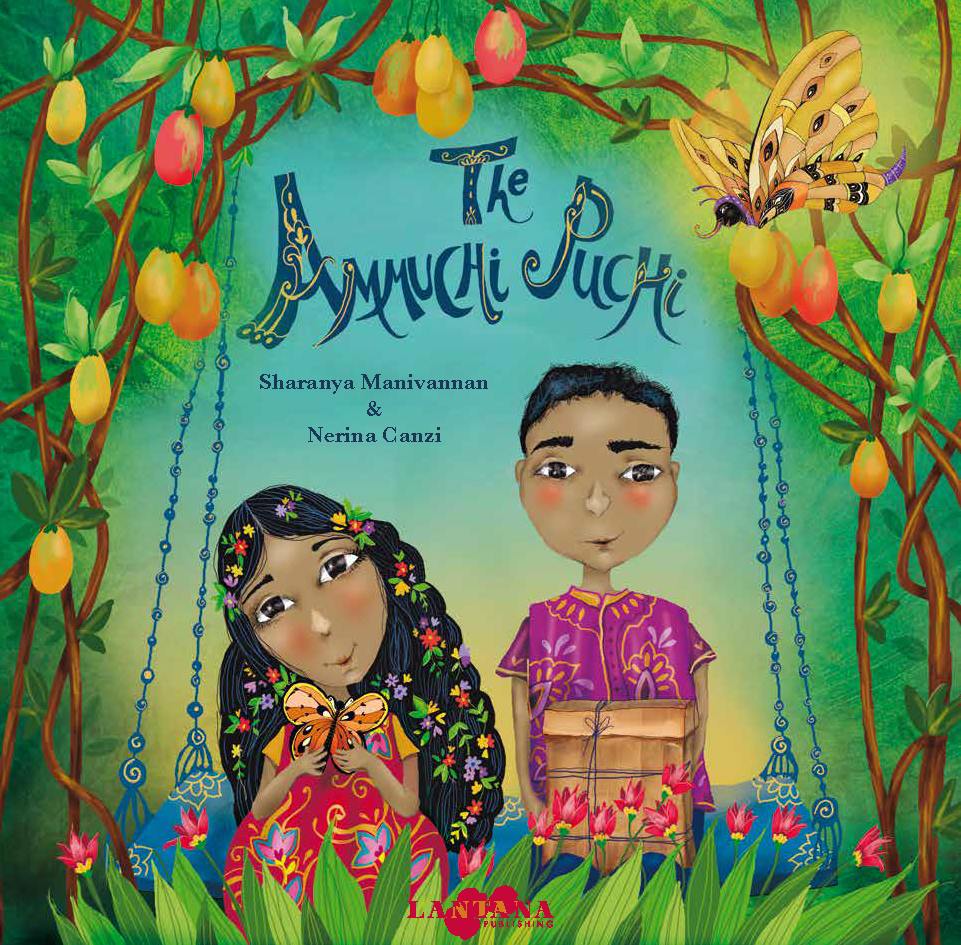
When Anjali and I were really little, we were sort of afraid of our grandmother, Ammuchi…

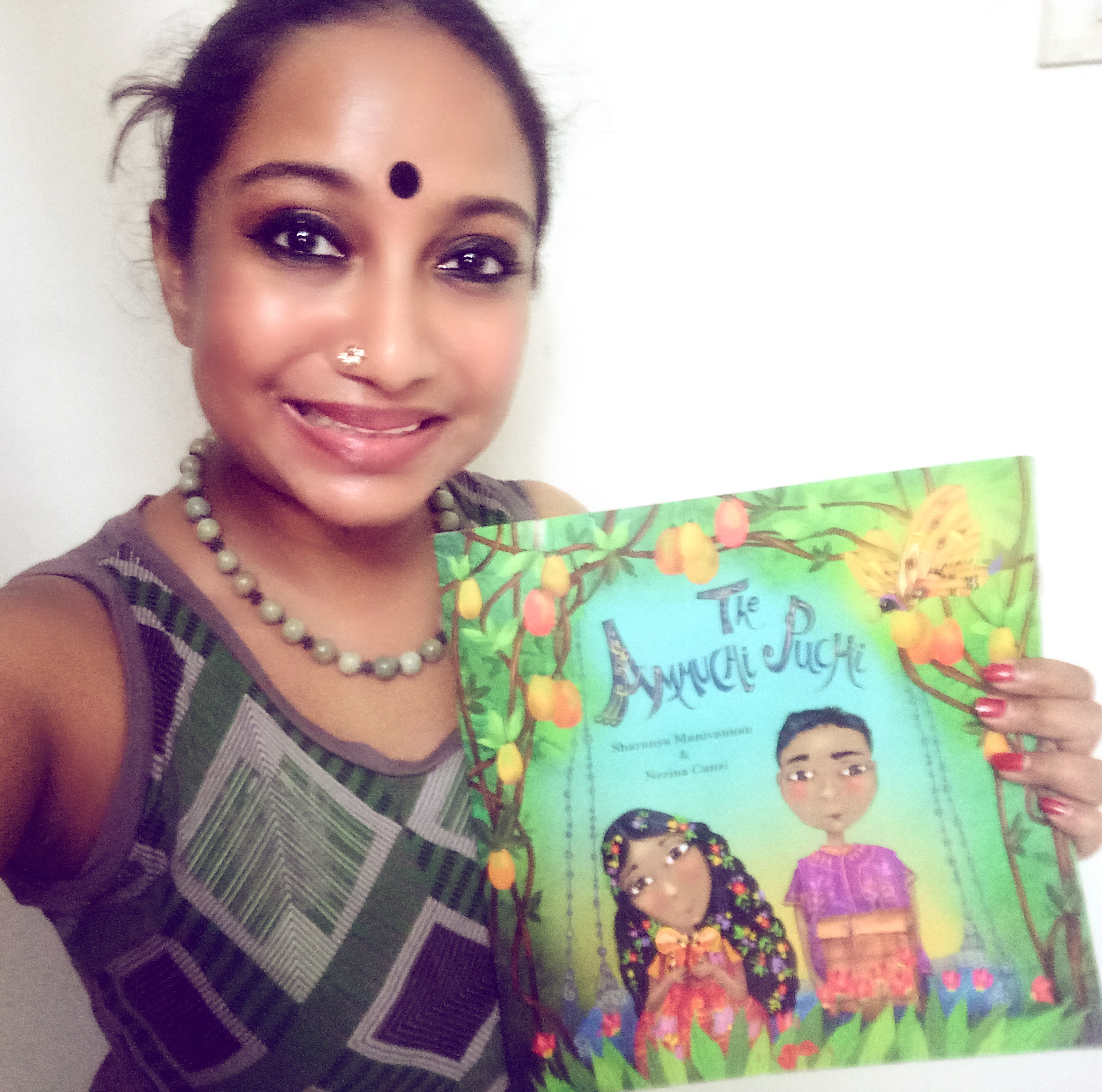
Aditya and Anjali love listening to their grandmother’s stories, particularly the scary one about the ghost in the tree. But the night their grandmother passes away, all her stories seem to lose their meaning. Then something happens that is more mysterious and magical than any story. Could their grandmother still be with them after all? A poignant and moving story about bereavement and healing, stunningly illustrated and told in gorgeous poetic prose.


Selected reviews & interviews

‘Sharanya Manivannan’s beautiful story will help sensitive children from the world over make friends with loss, and Nerina Canzi’s colour-drenched, jewel-like illustrations bring this tale of grandmothers, families and a very special butterfly to radiant life. The Ammuchi Puchi will take children, and adults, of all ages, on an unforgettable, sweet-sad journey from grey back into a world of glorious colour.’ – Nilanjana Roy, award-winning author of The Wildings

‘Stunning, vibrant illustrations bring this book to life… Not only is this a poignant story, handling the issue of bereavement with tact and understanding, it also shows children that grief is a universal emotion, shared by all cultures and peoples. Simply beautiful!’ – North Somerset Teachers’ Book Awards blog

‘This is just a beautiful book, about love and loss and magic and subjective truth, the hugest of subjects delicately handled for the smallest of people.’ – Preeta Samarasan, award-winning author of Evening is the Whole Day

‘I was genuinely very emotional by the end of this book. I loved these children and their grandmother so much, it’s a very important relationship exemplified with emotion and heart…. The story itself is artfully done, we learn about a strong, sparky, joyful and creative female role model in Ammuchi, who adores her grandchildren, inspires them and ignites their imaginations! … A traditional story feel, bursting with bright colours and emotion set to the backdrop of beautiful India. One for every bookshelf and library.’ – Alexis Filby, Book Monsters

‘The essence of Ammuchi Puchi is of universal appeal and relevance. It’s a beautiful picture book, both for sharing and, with its satisfyingly substantial text, for an older child to read alone. It is a moving, thought-provoking story that doesn’t offer any answers, but only asks of its readers that they have an open mind – and is all the richer because of it.’ – Marjorie CoughlanWindows, Mirrors, Doors

On Magical Butterflies And The Special Love Of Grandmothers” – Interview on the Lantana Publishing blog


Purchase online

Lantana Publishing

Amazon.in

Book Depository


sharanyamanivannanammuchipuchi


The Ammuchi Puchi ~ written by Sharanya Manivannan and illustrated by Nerina Canzi ~ Lantana Publishing, UK, October 2016

Save

The Venus Flytrap: Dancing To The End Of Love

When Leonard Cohen, whose legacy will probably live forever, died last week, public mourning was more withdrawn than usual. Perhaps it had to do with all the other news of that week, and how the luxury of emotional reactions seemed futile against humanity’s folly. So people shared songs without musings. And goodbyes without eulogies about when they first heard hello. But even if he had passed away in less fraught a week, these responses may have been the same. His lyrics had a way of saying everything necessary, at once personal and all-encompassing.

Leonard Cohen’s words often found us in intimate moments, or more precisely, led us to them – gently swinging the door open for intimacy to wander in and close it promisingly behind her. I thought over the songs that had imprinted themselves on the corridors of my memory and blushed. There were rooms in low light, there were roofs in moonlight, there were regrets turned rosy by what that poet’s baritone made us believe. There were reasons. And there was no reason to reveal them.

There were other kinds of poignancies too. A new friend with whom “Suzanne” was drunkenly sung, still demurely seated at a just-cleared lunch table in Calicut, who passed away not long after and who the song now always reminds me of. But I can’t write about him without feeling that it would anger the old friend, who is no longer one, the one who he actually belonged to.

But like songs, or like secrets, does anything ever only belong to one person alone? The answer is yes, but only that which rests on a palm, not inside a fist.

There will be many people who know only one song of Cohen’s, and they know it in someone else’s voice. They know it from Jeff Buckley’s dulcet rendition or they know it from Shrek (or one of the hundred and one TV shows or films that elevated any scene at all through “Hallelujah” alone). And to them, I say: there’s so much more. Begin with the ones that feel like you’ve heard them somewhere (you have), but maybe weren’t listening as intently then: “Famous Blue Raincoat”, “Bird On A Wire”, “Dance Me To The End Of Love.”

And then – if you’re still interested – find my rare favourite, “The Gypsy’s Wife”, with the wild woman, the Salome-Kali dancing with a decapitated head on the threshing floor in the liminality between light and dark. Go further – chase Cohen’s words from the audial to the page. Read his poems. Read his novel, Beautiful Losers, on the Native Canadian saint Katherine Tekatwitha, one of the last things he authored before a nervous breakdown led him to realise he needed to move towards the stage.

Go talk to someone else who loved his work so much they ruined some of his songs for themselves by giving them away, and this is what you’ll learn: still, because they are simply too beautiful to not share, they’ll give them away again. That’s Cohen for you: a spiritualist who knew that transcendence was not in renouncing the world, but in taking its hand, reading its open palm.

An edited version appeared in The New Indian Express on November 17th. “The Venus Flytrap” appears on Thursdays in Chennai’s City Express supplement.