Featured

Sharanya Manivannan – Long Bio

Sharanya Manivannan writes and illustrates fiction, poetry, children’s literature and non-fiction. She was born in 1985, grew up in Sri Lanka and Malaysia, and has lived in India since 2007.

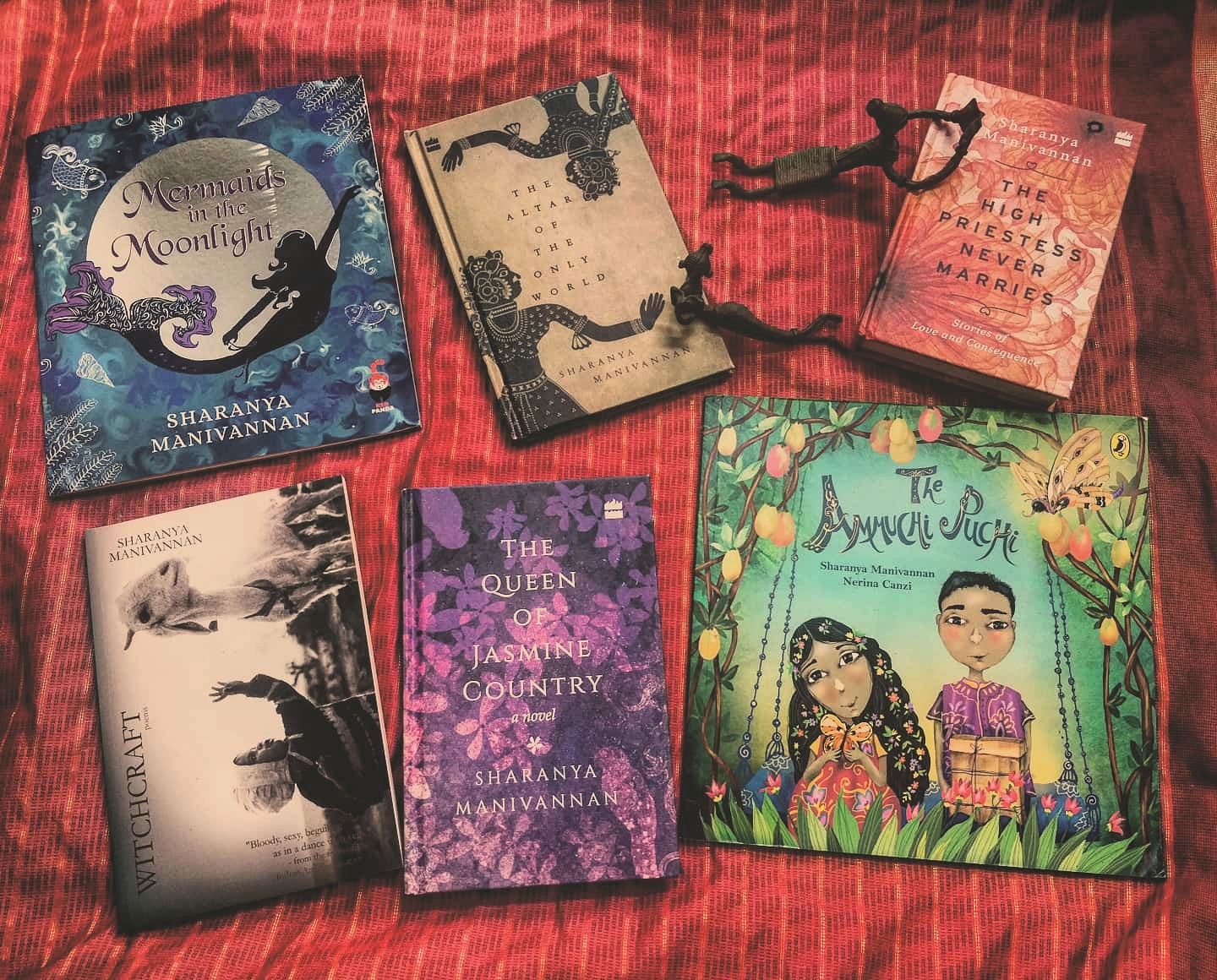
Sharanya’s books are: Incantations Over Water (graphic novel, 2021), Mermaids In The Moonlight (picturebook, 2021), The Queen of Jasmine Country (novel, 2018), The Altar of the Only World (poetry, 2017), The High Priestess Never Marries (short fiction, 2016), The Ammuchi Puchi (picturebook, 2016) and Witchcraft (poetry, 2008).

Her short story collection The High Priestess Never Marries won a 2016 South Asia Laadli Award. Her books have also been nominated for The JCB Prize, The Hindu Prize, The Neev Book Award, The Atta Galatta-Bangalore Literature Festival Book Prize, The Tata Literature Live! First Book Award and other honours. 

In 2024, Sharanya received a Devi Award, which recognizes exceptional women for dynamism and innovation across fields. She has also been a recipient of the Lavanya Sankaran Fellowship from Sangam House (2008-2009) and the Kolam Fellowship from Kolam Writers’ Workshop (2023).

Her poetry has appeared in anthologies including Out Of Sri LankaEleven Ways To Love and The Red Hen Anthology of Contemporary Indian Writing. Her fiction has appeared in anthologies including The Female Complaint: Tales Of Unruly Women and Influenced: Stories From The Lockdown. Her essays have appeared in anthologies including Walking Towards Ourselves: Indian Women Tell Their Stories and Knot For Keeps: Writing The Modern Marriage. Her poetry, fiction and non-fiction have also been widely published in magazines internationally. Sharanya’s work has been nominated by magazines thrice for the Pushcart Prize: for “Nine Postcards From The Pondicherry Border” by Flycatcher Magazine in 2012 (fiction), for “I Will Come Bearing Mangoes” by Rougarou Magazine in 2012 (poetry) and for “Echo, Shadow, Ether, Mirrorlight” by Marrow Magazine in 2023 (fiction). She also received a 2012 Elle Fiction Award for “Greed And The Gandhi Quartet” (fiction).

As a journalist, she has received two Laadli Awards For Gender Sensitivity for a piece about books and classical dance in The Caravan. Her personal and current affairs column, “The Venus Flytrap” appears in The New Indian Express (2008-2011 and 2015-present).

She has presented her work in Asia, Europe and Australia. In 2012, she represented Malaysia at Poetry Parnassus, part of the London Cultural Olympiad. In 2015, she was specially commissioned to write and recite a poem at the Commonwealth Day Observance at Westminster Abbey, UK.

Drawing on her own experiences of dislocation, abuse and resilience, Sharanya is known for work that amalgamates deeply personal questions about identity, trauma and longing with a feminist framework that is intended to impact the collective imagination about how to care for ourselves, for nature and for one another.

Sharanya is currently working on fiction and non-fiction manuscripts. She does not have an agent, and can be contacted for professional enquiries at sharanya(dot)manivannan(at)gmail(dot)com.
Featured

MY BOOKS

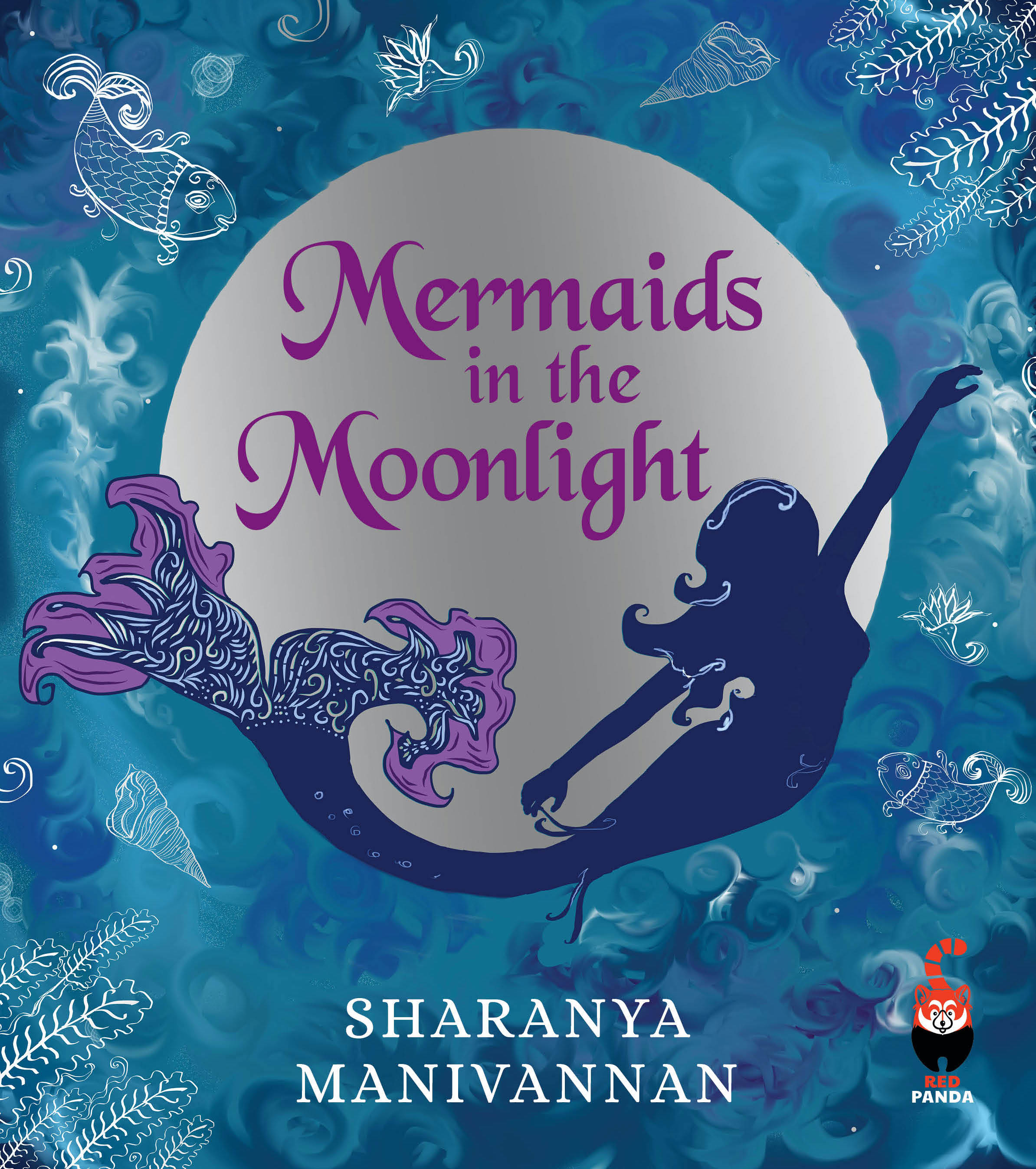
MERMAIDS IN THE MOONLIGHT

More about this book, including interviews, reviews and excerpts.

Shortlisted for the Atta Galatta-Bangalore Literature Festival Book Prize 2021

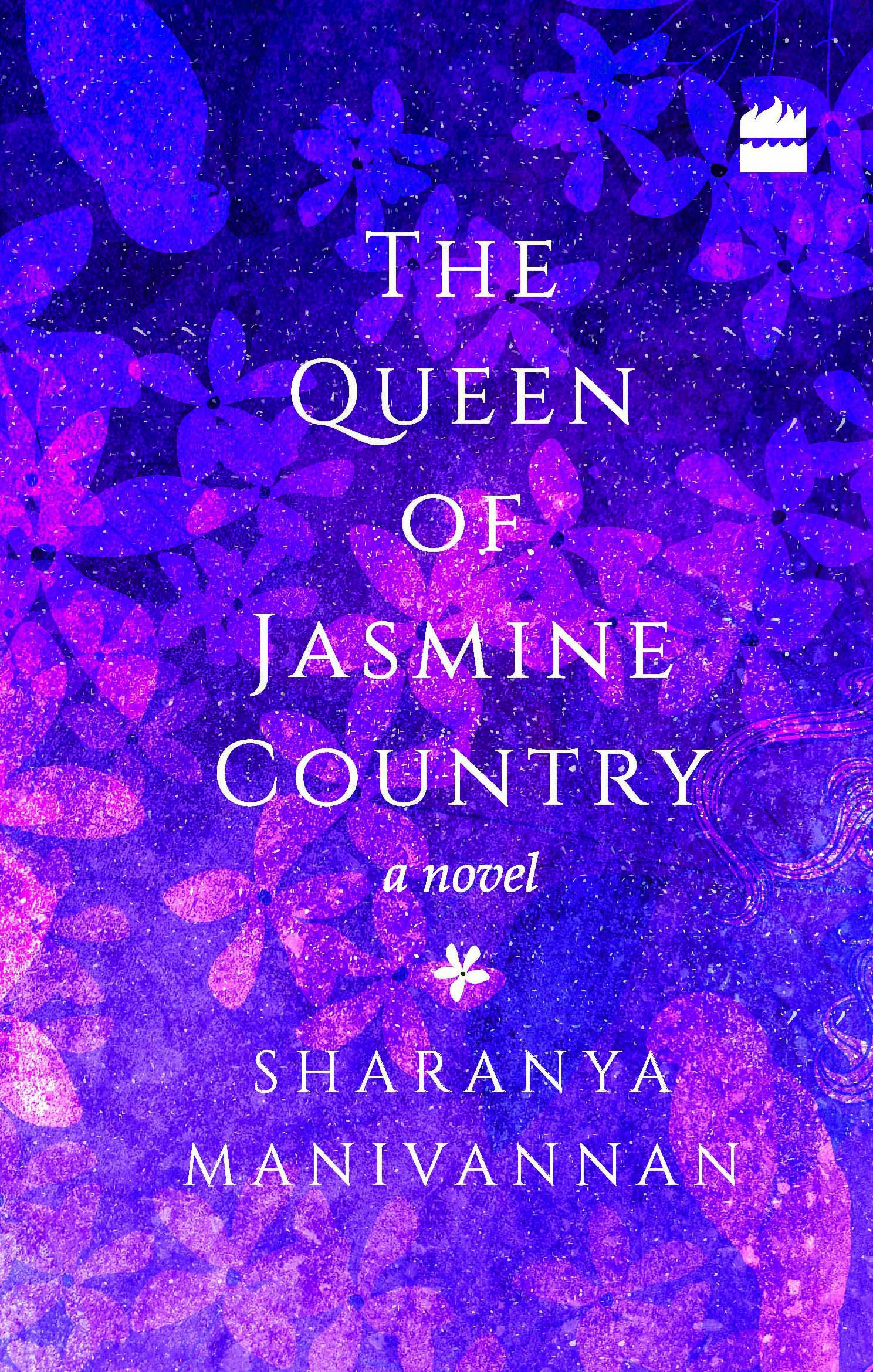
THE QUEEN OF JASMINE COUNTRY

The Queen of Jasmine Country_Cover Spread

Shortlisted for The Hindu Prize 2019 [Fiction]


Longlisted for The JCB Prize for Literature 2019


Longlisted for the Mathrubhumi Book of the Year Award 2020


More about this book, including interviews, reviews and excerpts.


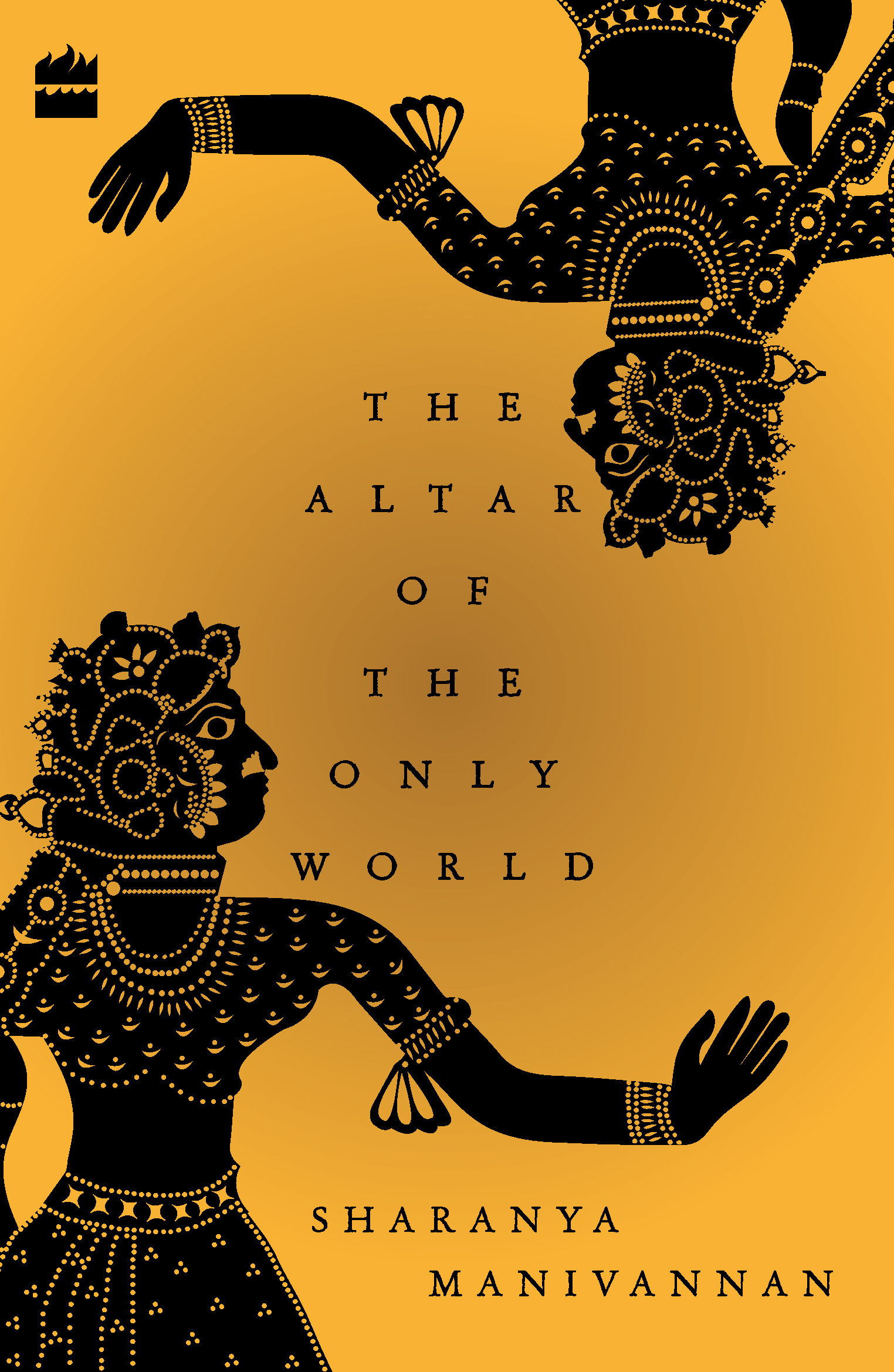
THE ALTAR OF THE ONLY WORLD

The Altar of the Only World-15


More about this book, including interviews, reviews and excerpts.


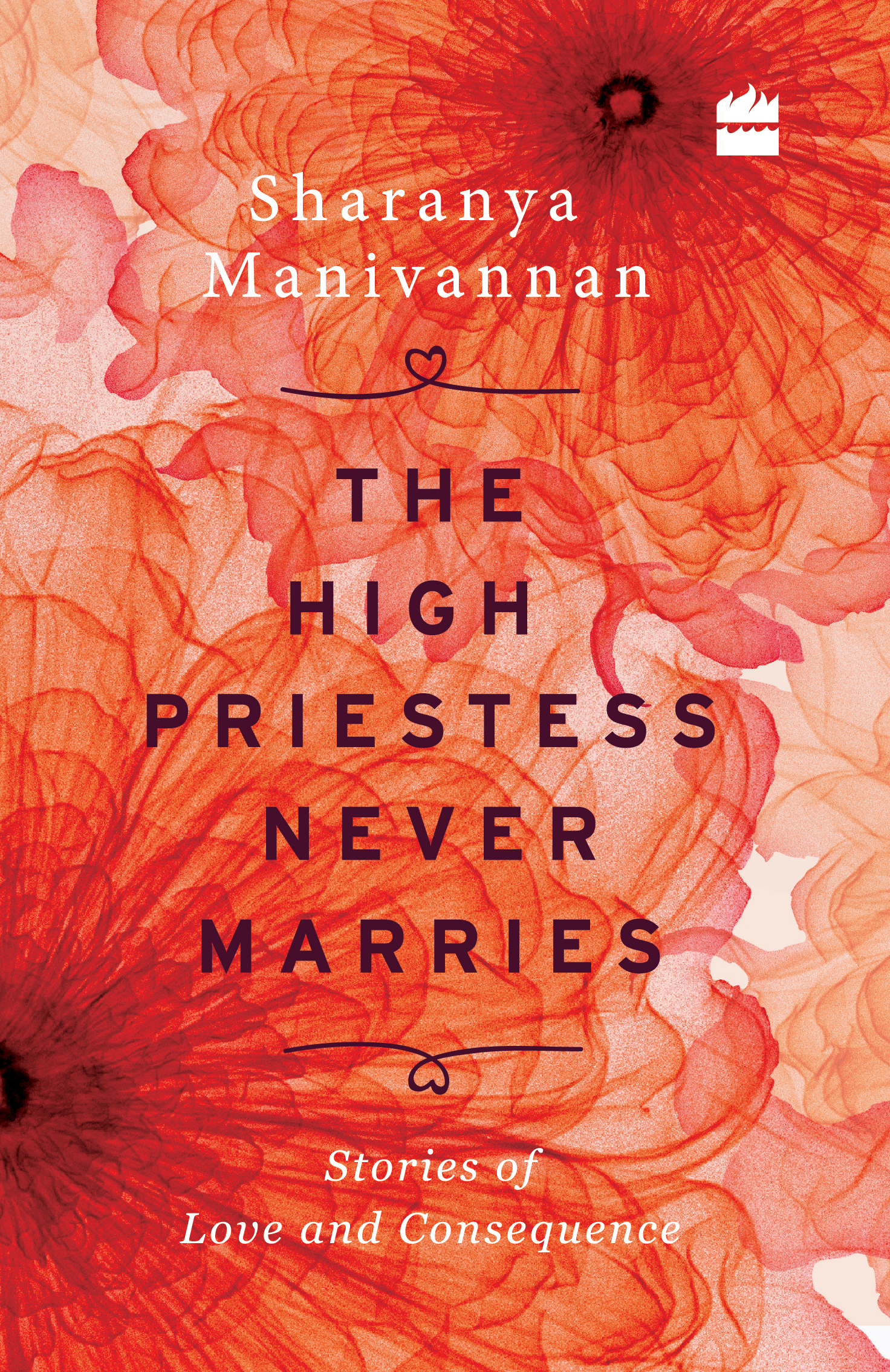
THE HIGH PRIESTESS NEVER MARRIES

The High Priestess Never Marries

Strung like luminous pearls, The High Priestess Never Marries is a collection of evocatively written short stories that feature women who seem suspended between relationships, living in moments fraught with desire and despair. Set in current day Chennai, these unnamed female protagonists cherish their independence, even within the bounds of relationships, and find their inner voices through an exploration of sensuality and choice. These are women who have accepted their many loves, their imperfect selves, and their fractured lives. In appreciation of the portrayal of single women in strong roles who cherish their independence and imperfection, The High Priestess Never Marries is awarded the South Asia Laadli Media and Advertising Award for Gender Sensitivity 2015-2016.” – Award Citation


Winner of the LAADLI South Asia Media & Advertising Awards for Gender Sensitivity [Best Book – Fiction]


Shortlisted for the Tata Literature Live! First Book Award for Fiction


Longlisted for the Atta Galatta-Bangalore Literature Festival Book Prize 2017


More about this book, including interviews, reviews and excerpts.


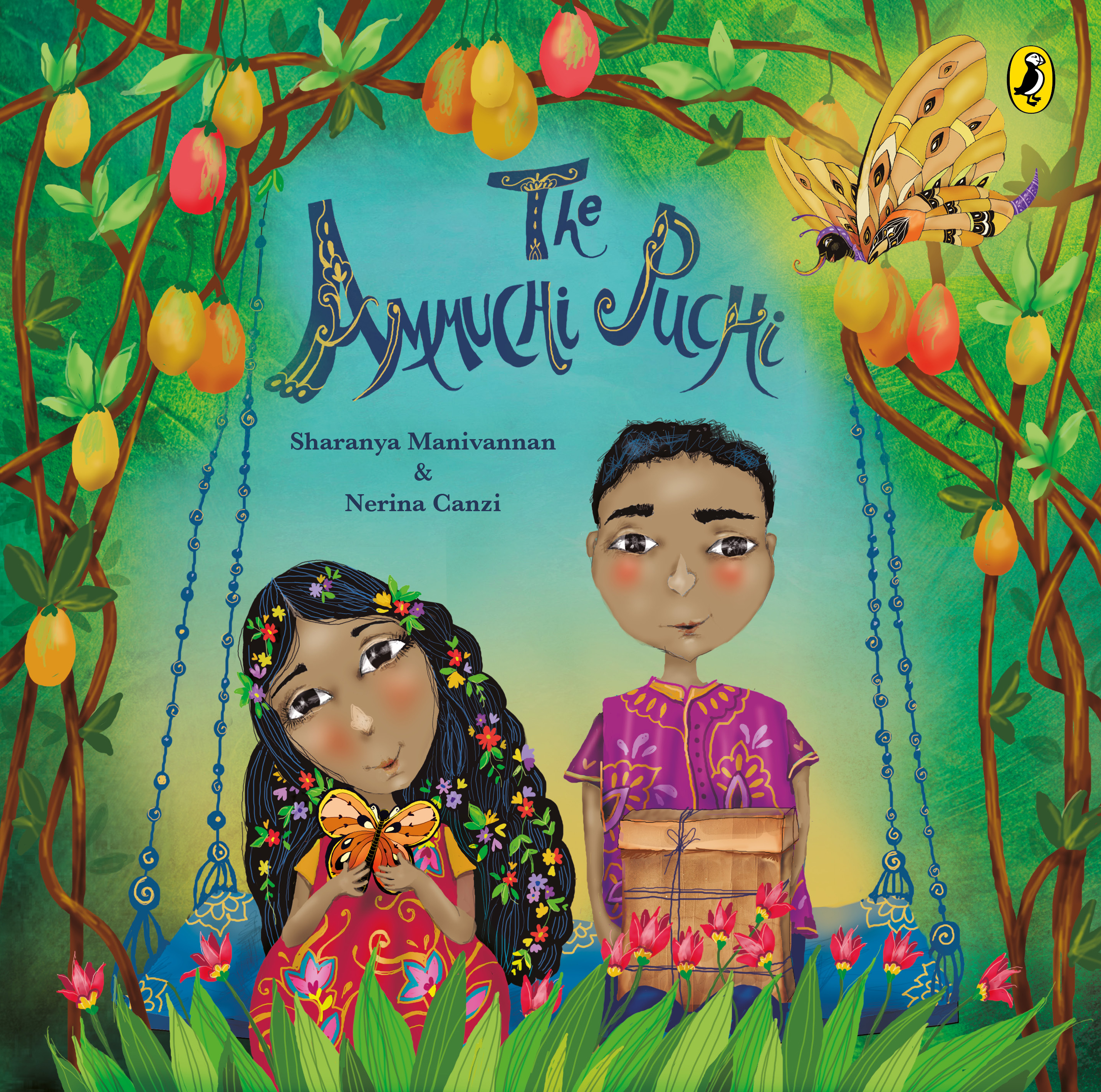
THE AMMUCHI PUCHI

Ammuchi Puchi

Honourable Mention for a Neev Children’s Book Award 2019


Shortlisted for a Peek-A-Book Children’s Choice Award 2018


Nominated for Best Writer Of The Year at the Comic Con India Awards 2019


More about this book, including interviews, reviews and excerpts.


WITCHCRAFT

Sharanya Manivannan - Witchcraft

“Sensuous and spiritual, delicate and dangerous and as full as the moon reflected in a knife.” – Ng Yi-Sheng


‘Bloody, sexy, beguiling as in a dance with veils.” – from the foreword by Indran Amirthanayagam


(Out of print)

The Venus Flytrap: The Parts Of Us That Are Left Behind

Just before the solstice, a precious friend travelled to see me and arrived into the tidal resurgences of my life like a pair of bookending bulwarks, her presence parting the churn and providing solid ground.

            She told me a story from Japan – whether folklore or parable, I neglected to record, and I apologize for not asking her for its origins before I pay the story forward. I tell it to you now the way I remember or reimagine it.

In this tale, a young woman runs away from her father’s house to be with her lover. They traverse rivers and cross bridges. They cultivate a new life elsewhere, raise children and crops, and live well enough. Life has little to bewail it, other than the memory of what had to be let go of.

            Still, a disquiet runs through her, and her partner pays attention to it. Alone, he travels back to their native village, retracing the path they fled, and visits the man who is now his father-in-law, even if estranged. At the threshold, when the door opens, the younger man tells the older one: “Your daughter and I built a life together, against your wishes, but her longing for your love has never abated. Time has passed, and much has happened. I want for you both to reconcile, and for you to meet our family.”

            “This is not true,” says the father-in-law. “My daughter has been upstairs for years, remaining in her bed. She took ill and has remained heartsick all this time, and does not leave her room at all. You may see for yourself.”

            The younger man follows the older one into the house, puzzled. There, in a room he had never entered, is a young woman he remembered: his wife as she was before she became his wife, only wan and frail. A shadow.

            Shaken, perhaps even uncertain about whether his own life was but a dream, the man returns to his home and tells his wife what he saw. Needing to solve this mystery, they journey together to her father’s home.

            There: the woman and her shadow merge.

            You can predict this folktale, at least in my telling of it – the grist imprinted in me, from my friend’s telling – ends on a note of contentment.

            This is a story about disassociation: about the parts of ourselves that remain locked within interior rooms because of a trauma, or a transition that’s too much to take in at once. It is a story of reintegrating parts of ourselves that were lost, left behind or taken from us. To do so requires going back – not literally as much as psychically – to the place in time when it happened to us.

            At the cusp of another year, as a year ends during which I surrounded myself with grace and hope your life too allowed you to embody something like that, I hope it is not difficult for you to retrieve your fragments.

            This is forever work – or at least, a lifetime’s. But something about a changing calendar carries with it hope: there’s time. It’s marked, numbered, dated, diminishing constantly – but there is time.

An edited version appeared in The New Indian Express in December 2023. “The Venus Flytrap” appears in Chennai’s City Express supplement.

The Venus Flytrap: Menstrual Leave Matters

Earlier this month, the subject of paid menstrual leave came up in the Rajya Sabha, when Rashtriya Janata Dal MP Manoj Jha posed a question about whether the central government would accommodate the same, as a matter of policy. Representing the ruling Bharatiya Janata Party, MP Smriti Irani responded: “As a menstruating woman, menstruation and the menstruation cycle is not a handicap, it’s a natural part of women’s life journey… We should not propose issues where women are denied equal opportunities just because somebody who does not menstruate has a particular viewpoint towards menstruation.”

            Irani has repeated a version of what Rachel on Friends memorably and succinctly said: “No uterus, no opinion.” Yet, what she presents as a mansplain scenario is anything but. People who menstruate are the ones who initiated the issue of paid menstrual leave, and made it a political talking point – one which people who don’t menstruate can also offer allyship for, as Jha appears to be doing.

            Intriguingly, other Asian countries already have long-term models in place for paid menstrual leave, in addition to other sick leaves, which means India is lagging. Japan instituted menstrual leave in 1947, with partial or full payment observed in most workplaces. South Korea, Taiwan and Indonesia all have their own versions of policies: from a day a month to three days a year, with fines for non-compliant employers. It should be noted that Bihar brought in paid menstrual leave in 1992; Arunachal Pradesh and Kerala have also attempted to introduce such bills.

It’s possible that Irani and other naysayers envision scenarios in which all women disappear from their respective workplaces for five days every month, but that’s far-fetched. What activists on this issue request is merely the option of discretionary leave. Absence is neither mandatory, nor will most take up the option on a regular basis. While work ethic differs across cultures, statistics from the last five years indicate that only 0.9% of Japanese menstruators and 19% of Taiwanese menstruators surveyed used this leave allowance.

            Paid menstrual leave is one of numerous changes that will make workplaces more welcoming for women, who have also been statistically proven to have left the Indian workforce in droves in recent decades, and whose participation still remains low, at just 37% as per this year’s reports. While it would be most important for those with debilitating menstrual problems, even if one does not avail the leave, the awareness that provisions have been made for unique challenges instils a sense of being accounted for, if not valued as well. In that sense, paid menstrual leave would in fact encourage the equalizing of work opportunities, on both practical and psychological levels – not the denial of them.

This is not to dismiss other workplace issues: pay inequity, discrimination and plain old hierarchical and human toxicities. Paid menstrual leave is just one step, one that is not difficult for companies to set up – whether or not a law requires it. Certain Indian companies – notably successful startups – have introduced it already. Menstruation is a fact, and for some it is a handicap. Taking this into account can assist careers, break taboos and foster inclusivity.

An edited version appeared in The New Indian Express in December 2023. “The Venus Flytrap” appears in Chennai’s City Express supplement.

The Venus Flytrap: Disappear, Or Keep Being Deceived?

At the dawn of social media, it still meant something to follow/friend someone, because social media was mostly only who we knew. Then it grew: it came to contain people we got to know IRL, or whose work we were glad to have found. Eventually, it shapeshifted into the beast it is today. Social media no longer signifies anything authentic, even as it has major ripple effects onto the non-virtual actual. The impact of this circus on our wellbeing is certainly real, even if little else is.

            Most of us use social media in a two-pronged way, both being present on it (to whatever degree of activity) while also receiving information from it. The content and the subtext of both parts of this exchange affect our relationships.

            I’ve not been able to sustain my side of some friendships because of the dissonance between who they are and how they portray themselves online, particularly if activism is a part of their career. I’ve been worried about whether someone can be trusted because they’re connected online to someone who shouldn’t be. If I’ve extrapolated because of red herrings, I’ve also been forewarned because of clues.

In our own posts, if we drop the former knowingly, we drop the latter even when we’re careful. Take for instance: someone I met for the first time told me how their algorithm shows them posts related to healing from a certain situation, which I’d already “liked”. That’s how they deduced that I had been going through something.

I’ve also been deeply confused about how social media can be used as a proxy relationship. An old friend, who has chosen to no longer be one, still watches my Instagram Stories – on which I post nothing personal, almost ever. They barely used the app before. They ghosted me, yet haunt my online presence. Who knows what stories they’ve told themselves to justify this strangeness.

Then, there are its uses as personal propaganda, beyond performance. More than once, I’ve been conned by someone playing a long game, who approached me online, all saccharine. In the most painful of those experiences so far, the mask dropped after I began working for them, much later. Needless to say, once I left, they blocked me online from the very things they had me build for them.

I publicly withdrew my work from a project by someone with a proven but little-known record of abusive behaviour. Many – who know this person only or largely through social media – sang their praises, publicly too, soon after.

An event organizer told me rudely on the phone that they were doing me a favour by even hosting me, only to post online minutes later about the paroxysms of joy they were in to have the privilege.

Then there are the numerous garden-variety tactics of climbers of all kinds – transparent at times, and effective enough at others.

All this is about human behaviour, not algorithms, influencers or capitalist underpinnings. By now, we should know social media is smoke and mirrors – but we just don’t look away enough, or look deeper. That too is a human flaw. The conundrum: disappear, or keep being deceived?

An edited version appeared in The New Indian Express in December 2023. “The Venus Flytrap” appears in Chennai’s City Express supplement.

The Venus Flytrap: Not So Faltu, Really

During a recent appearance on Ranveer Allahbadia’s Youtube show, film personality Neena Gupta repeatedly said, citing numerous personal examples, that she just doesn’t believe in striving for gender equality.

            I watched the episode with subtitles. I Googled what “faltu” means – as in “this faltu feminism”, Gupta’s own words. “This useless feminism”. I’m aware that Allahbadia, whom she was dialoguing with, has been regarded as problematic for various reasons, but his is not the kind of content that I consume or keep track of. Gupta though – as one segment of the show touched on – is considered likeable, especially by women in their 30s, including me. There’s something relatable about her, in terms of who we can all be – those of us who live unconventionally, whether or not we are ambitious, and whether or not we are in or out of the public eye.

            I also like her daughter, the fashion designer Masaba Gupta, even though I can’t get out of my head the heavily loaded symbolism portrayed in one episode of her Masaba Masaba webseries. I can’t unsee the way she was flaunting and fondling lotus flowers while floating in a shikara in a lake in Kashmir. If you know, you know.

             But to return to Neena Gupta: it’s true that she shouldn’t have to prove anything at her age, having already lived and loved in ways that are revolutionary to this day. The trouble is, however, that by not appreciating that it is because of a feminist movement that she has been able to experience that life – with all its regrets, and the volition she had anyhow – she doesn’t pay it forward. It’s because of feminism that she could raise a child as an unwed single parent, continue to find work as an actor in her 60s and to be a director at all, as well as enjoy a range of lifestyle opportunities and be able to tackle certain challenges more easily. How she expects women to be financially independent and be themselves, as she advises, without the feminist imagination, is not practically or logically coherent.

Perhaps the fact that she doesn’t identify as a feminist, despite being someone who could be a feminist icon, means that Neena Gupta is free of pressure in certain valuable ways. She needn’t be impacted by the incredibly facile pedestalizations and swift depedestalizations that frequently occur in circles and interfaces that publicly align themselves with progressive thought, since she has herself chosen not to make that alignment.

Yet it is by acknowledging the collaborative, complex work of a movement that one gets to teach, or show, other people that they need not feel alone. It is also how one feels less alone. What I noticed throughout the interview was that Gupta repeatedly revealed her own vulnerability and exhaustion, sharing intimacies about her lack of confidence, her fear of needing other people, how marriage and child-raising are forms of bondage to women, and how dangerous it is to be female in this society. This is exactly why a conscious politics of care, intersectionally feminist, could matter to her and to others. There’s room in this movement for this and more.

An edited version appeared in The New Indian Express in December 2023. “The Venus Flytrap” appears in Chennai’s City Express supplement.

The Venus Flytrap: Concepts Of Loving

I haven’t been able to stop thinking about the text I saw on a reel on Instagram – it popped up briefly on my screen and was then never to be spotted again (that is, until the algorithm sends me the same thing a dozen times over, with a different person hamming it for the ‘gram each time). The line said something to this effect: that the person posting loves their mother “conceptually”, despite a litany of triggers.

            I adore that descriptor – “conceptually”. It’s a healing admission: loving only because one is conditioned to. Loving conditionally, because that’s the boundary that allows one to love oneself. Loving because that is what one does, despite what the other is – but cognizant of this all. That word makes it possible to deconstruct Love into myriad meanings and effects, as per actual experience. Most intriguingly, it opens the possibility of other renamings. Abuse is not love. Fear is not love. Control is not love. When our love, as we give it, isn’t met with equal (or adequate) love, we can – if we have the courage to – love less, or even love no longer. On the other side of the compulsion to love is the freedom to love better, and without duplicitous demands. Love is not self-abandonment.

            On a related note, the dating app Bumble has released an annual report listing trends that the company says it anticipates for 2024, ostensibly based on a survey. The catchy terms they have used for these trends have been faithfully reproduced by Indian publications. It’s unclear whether anyone who coined them has actually dated in this country, let alone through an app, because the view looks rather rosy in their PR campaign. Still, because hope floats, and one of the hopes is that having language for one’s desires may ignite their fulfilment, this marketing tactic caught my attention.

            The trends are: “val-core dating” (sharing sociopolitical perspectives, with 64% of Indians who took the app’s survey agreeing that human rights issues matter), “intuitive intimacy” (in which emotional closeness takes precedence over sexual needs), “consider-date” (most mokkai name, but like much mokkai is quite sincere: emotional intelligence and deliberation as opposed to reckless choices); “open-hearted masculinity” (more openness and vulnerability from the male-identified), and my big favourite, “betterment burnout” (saying No to pressures to constantly self-improve, instead embracing a more natural state and pace).

I love all these terms. Conceptually, that is. Practically also, for sure. Look, I don’t believe Bumble’s statistics, and I certainly don’t believe that these wonderful changes are going to sweep through Indian society on short notice, but the trends suggested above are all good things. Maybe we will talk about these wishes more, whether or not we use the cutesy monikers they’ve been given. Maybe we will name them as our own desires, and through this naming experience more volition in how we live and love – and how we leave, how we let go.

We may love undeserving people conceptually, because emotionally and biologically we know no other way. But we can also love people consciously, even reciprocally (if we’re lucky). Beginning, and ending, with our own utterly deserving selves.

An edited version appeared in The New Indian Express in November 2023. “The Venus Flytrap” appears in Chennai’s City Express supplement.

The Venus Flytrap: Misogyny & The Modern Woman Politician

“I have terrible taste in men,” Indian Member of Parliament Mahua Moitra told The Guardian recently. The comment was not a throwaway revelation – it was related to character assassination attempts made on her using a cropped photograph, which she believes an ex leaked. Moitra is currently being investigated by the Ethics Committee on corruption charges, which she says are fabricated because she is an Opposition politician – and a woman.

            Moitra is a rising leader, and a dissident voice in more than one way. In hitting back, she has been speaking to the press both internationally and in the country, and overtly so about the misogyny she personally experiences. “Disobedient women are here to stay. Get used to it,” she posted on social media, linking to one such interview about her potential expulsion.

            Whether the articles focus on fluffy topics like her preferred luxury brands, or more directly address the political ramifications she is facing now, the overall effect posits Moitra as a politician who has been the target of specific kinds of attacks because she is not only a woman, but a certain kind of woman.

            Rebecca Mammen John, a senior advocate at the Supreme Court of India, was quoted in the same British profile of Moitra as describing her friend and her friend’s detractors as follows: “The Indian man, more so the politician, cannot handle a woman who has a brain, is well educated, understands finance, is confident, and exercises sexual agency. That’s why the right goes after her.”

            There have been numerous Indian women politicians through the decades, obviously – each with her own personal values and public alignments, and ways of coping with or pandering to societal, patriarchal and institutional expectations. Even those who have behaved as patriarchal agents themselves are oppressed by the system they seek to uphold. Others directly critique misogyny, which is not necessarily the same as having a feminist-informed political compass that is intersectional and evolving. Then there are some who have and operate by that compass, but don’t appear to be subversive.

Lately, a kind of politician who is liberal in her life and isn’t afraid to be seen that way has also emerged. They know there is no connection between being seen as a goody-two-shoes and actually being good at their jobs. This is new in India – and it is interesting to observe.

            While I dislike how politicians like Mahua Moitra and Nayana Motamma (of the Karnataka Legislative Assembly) are both well-intentionally and maliciously reduced to certain stereotypically modern proclivities, like a taste for wine or Western attire, there is something to be said for women like them being in the public eye and holding positions of authority. They are threats to the establishment not just in terms of the competition they present to conservative or even fascist politicians and political parties. They also present a challenge to “the establishment” as a collective, potent imaginary and a lived reality. They command respect because of the power they hold. The hope is that that respect then trickles down: to the ordinary woman, quietly or otherwise living a little or a lot askew to what society demands of her.

An edited version appeared in The New Indian Express in November 2023. “The Venus Flytrap” appears in Chennai’s City Express supplement.

The Venus Flytrap: Burnout, Rustout & The Fool

I have been thinking about naïveté as a superpower – or if not that, then at least as a form of intelligence, a gift, a gorgeous type of glitch, a moonshot even if a malfunction, a bulwark against a brutal world. Wait, if it is all these things, I meant what I said at first: it is a superpower.

            I have been thinking about this because I have spent this year trying to forgive myself for things that were never my fault, which is what the deep work of trying to heal from those things eventually led me to. The self-blame came when I named myself foolish, malleable, wrong. I tried to lean into bitterness and caution, and when I did, I found myself desiring to feel deeply, as I always had. That kaleidoscope of emotion could only come from openness, curiosity, vulnerability and risk.

I learned about a word recently – “rustout”, unlike burnout. To rustout in life, work or relationships is to feel no flash of inspiration, no spark, while to burnout is to short-circuit, to be forced to stop. To rustout is to be able to remain consistent, but without reward. Over time, something withers inside. The words have elemental origins: how instead of being incinerated, one is decayed by persistent drizzle. I think my naïveté should have razed long ago, or at least should be covered in iron oxide by now – and the truth is it kind of did both.

Yet, look: peeking through corroded chainlinks, arabesques of living green. On that scorched ground: commelina, touch-me-not, lantana. I invite it back, my naïveté, and I nourish it.

I will be forty in a couple of years, and my life is still only just beginning. I am so lucky to be almost old enough to think myself too old for newness – and so lucky that I don’t think so.

I forgot, until I found myself tracing old lines: I have been at this junction before, weary from other wars. I sipped on fortifying antivenins, and slipped on armour. Then, the allure of ingenuousness came for me again. I returned to the ways of the unjaded, even if another kind of cynicism hemmed the edges of my softness. I loved and learnt. I gave and was stolen from. I reaped reparations, I reaped what I sowed and the harvest was often lusher than I thought my life would allow me. Here I am, again and still. This life expands even as the heart and the spirit contract. Even as the world reveals itself – both in one’s own ambits and in vast, unpardonable injustices – to be darker, harsher, more greedy and more malicious than one has the capacity to imagine.

I fight myself, and fault myself, because I can’t imagine that anyone can do what has been done, yet it has transpired. In that unbelievingness is the most sacred part of my naïveté. Because I cannot imagine how anyone could do that, I am unlikely to do it myself. Innocence means to be without blame. I am. Naïve. Foolish – in the language of the Tarot – certainly. What a lovely, strange way to still be.

An edited version appeared in The New Indian Express in November 2023. “The Venus Flytrap” appears in Chennai’s City Express supplement.

The Venus Flytrap: The War Planes Must Be Silent

For weeks, I had something to write of other than Gaza. I could afford to look away. On each of those weeks, I felt guilty, and on each told myself: does it matter if one less writer said something, when words cannot be enough anyhow? In this and any other such place, at this and any other such time: it is public policy modification, systemic redressal, reparative justice and, above all else, immediate relief work and military withdrawal that matter. A ceasefire – now – will provide reprieve. Nothing less will do. The changing of hearts and minds is tasked to teachers and artists – yes – but as a genocide unfolds, the work of artmaking, reading and discourse feels like throwing paper planes in a drizzle.

            A moment for these lines by the Palestinian poet Marwan Makhoul, which have been shared these past weeks on the Internet: “In order for me to write poetry that is not political, I must listen to the birds & in order to hear the birds, the war planes must be silent.”

It is a privilege to make metaphors about paper planes when speaking of people far away, threatened daily by war planes.

            I will tell you the truth, dear reader: I am heartsick from seeing how little impact words have in this country today. They make me wonder whether we can have any impact on the world, when appealing to reason, compassion or ethics seem to have yielded so little right here.

Still, in the words of the poet Rupi Kaur, who declined the Biden administration’s invitation to a Diwali party to affirm her stance against US support for the Israeli government’s war on Gaza: “The privilege we lose from speaking up is nothing compared to what Palestinians lose each day because this administration rejects a ceasefire”.

            This column is peppered with the words of others, others whose stakes are higher: life, livelihood and loved ones, or prestige and recognition. Elsewhere in the world, people are losing jobs and opportunities, being disinvited or having awards rescinded, and being doxxed for expressing sentiments that support the rights of Palestinians to be free of siege. What are the stakes for me or indeed for most in India now, to speak out on their behalf? They are much lower. Historically, administrative India has favoured Palestine. Even as the tide may shift now for reasons of religious bias, trade and power, it isn’t as dangerous as dissent for people within our official national borders who are also under siege. Perhaps we have our own battles, and our own battle-weariness. But.

But if we don’t speak now, we simply watch. Silence turns habitual, deadly.

            One more quote, because in times of great learning, confusion, sorrow and helplessness, repeating and sharing can be as or more important than saying anew – the writer Omar El Akkad: “One day, when it’s safe, when there’s no personal downside to calling a thing what it is, when it’s too late to hold anyone accountable, everyone will have always been against this.” El Akkad speaks specifically in the now, about Gaza. But these words could echo in either direction of time, and place.

An edited version appeared in The New Indian Express in November 2023. “The Venus Flytrap” appears in Chennai’s City Express supplement.

The Venus Flytrap: Celebrating Separation

One of India’s contradictions, expressed so often that it is a trope, is that this is a country that worships goddesses and abuses women. Fittingly timed this past Navaratri, a rare story emerged that made some waves, one that doesn’t disprove the trope, but does fleetingly assuage the reality-sickened heart. In certain regional manifestations of the festival’s myths, the goddess Durga “comes home” during those nine nights and ten days of honouring her. In Ranchi, on October 15th 2023 – the first day of Navaratri this year – a woman named Sakshi Gupta returned to her family’s home after the end of her marriage. Her parents, Prem and Veena, escorted her back from her former in-laws’ home, where she was domiciled during the brief marriage, with a full band and fireworks. They celebrated her freedom.

            It’s like something out of a film – not only because of the grandeur and spectacle, but also because of its rarity. When was the last time that a woman in India exiting an unhappy or abusive marriage was so proudly feted and declared to the world by her parents? May there be many more such loving expressions, until the taboo breaks. Perhaps one day divorce celebrations will become as banal (and as boring) as weddings.

            I jest (sort of). India isn’t going to stop being misogynistic any time soon, which is why every inch forward toward a more equal future, even if we won’t fully experience it in our own lifetimes, matters. In our own lifetimes too, we deserve to see progress – and to celebrate wins small and big, as we strive on.

The Guptas’ beautiful gesture is twofold: firstly, to their own daughter, to her former in-laws and within their own circles, they have made a powerful statement that directly and positively impacts their own lives and those around them. Rising divorce rates in India – regardless of which party files for it – largely indicate greater empowerment of women, who reject the inequalities within the institution. They are a good thing.

Secondly, their decision to publicize (Mr. Gupta posted a video on social media) how they had stood by their daughter and celebrated her separation just as they had her wedding is an act of goodwill towards society at large. I would go as far as to say that it is essentially revolutionary: an invitation to families across the country to change their minds and hearts. To see someone else making a supportive choice bravely and joyfully may inspire others to do the same. Many women have walked out marriages without familial support. The Guptas have set a wonderful example for how they don’t have to.

Still, while I wasn’t jesting about weddings being boring, I was jesting about divorce celebrations becoming commonplace. It’s divorces and destigmatizing them that should become more common. Repeated taboo-breaking normalizes choices until they no longer carry as heavy a stigma, if one at all. The true impact of the loud, proud jamboree of the Guptas welcoming their daughter home cannot be understood only by counting similarly visible events. Encouragement and acceptance can also be very quiet – invisible tremors that shake society from deep within, each time.

An edited version appeared in The New Indian Express in November 2023. “The Venus Flytrap” appears in Chennai’s City Express supplement.

The Venus Flytrap: Within The Nightmare Of A Narcissistic Biome

Entertainer and entrepreneur Jada Pinkett Smith, also known as half of one of Hollywood’s most famous marriages, has revealed in a video interview that she and her spouse Will Smith have actually been separated for the last seven years. This is despite numerous red-carpet appearances, overshare moments on social media and talk shows, and an infamous slap at the Oscars just two years ago. The couple aren’t divorced, but have been living completely separate lives, according to Pinkett Smith.

            As a consuming public, we are not easily shocked. Reality TV, social media infamy, virality and other Warholesque 15-minutes of fame experiences are such a part of global culture now that it takes a lot to really stun us. Fifteen or twenty years ago, people would have felt betrayed that a couple they looked up to – who set the equivalent of the contemporary term #couplegoals – had been living out a lie in the public eye. Now, that the Smiths have a sham marriage is less shocking to us than it is, well, disgusting.

            Disgusting because they benefited financially from the premise that they were a power couple long after the union had disintegrated. Disgusting because Pinkett Smith’s personal brand has been about being willing to dig deep and inspire others to do the same. This isn’t about privacy; this is about the fact that they pretended. Deliberately and consistently.

The revelation is timed around the release of her memoir (Smith released one last year, but did not share in it that his marriage was a façade). This should tell you a lot about how hard it is to sell books, even with celebrity status. That industry fact doesn’t diminish the other obvious thing: which is that Jada Pinkett Smith is probably, in the clinical sense, a narcissist. That she chose to drop this bombshell to coincide with a book’s publication, rather than a film release or a new business venture – both of which would be more lucrative, and even more so because of the buzz around this disclosure– is the kind of bizarreness that only makes sense within the nightmare of a narcissistic biome.

Smith, meanwhile, has made self-flagellating public statements in response to his spouse’s exposé. Pinkett Smith now says, with now-unmistakable disingenuousness, that they are working on their relationship and may even begin living together again. This is the kind of morsel-throwing that would have worked in the 1990s, when celebrityhood could be attained only by a few and the lives of celebrities seemed desirably enigmatic. In contemporary perception, Pinkett Smith has not just discredited herself, but has also possibly outed herself as an abuser, an emotionally violent partner to a severely co-dependent one. She may be in charge of her marriage’s dynamics, but she has lost control of her narrative about it.

Survivors of interpersonal abuse rarely see relatable scenarios play out on public stages, though they are sometimes hinted at after the fact. The Smiths have offered the opportunity. In watching them, some may recognize themselves as survivors. If someone saves themself because of the ugly mirror that Pinkett Smith has held raised with such self-unawareness, that’s a sort of saving grace.

An edited version appeared in The New Indian Express in October 2023. “The Venus Flytrap” appears in Chennai’s City Express supplement.

The Venus Flytrap: The Right To Disappoint

The other night, I was dismayed to see a post by an author I deeply admire, expressing their support for the more powerful side, the systemic oppressor side, in a longstanding international conflict. The most telling aspect of their post was the visual used: a national flag, indicating that their support was not for the collective imaginary of a country’s peoples but for the nation-state itself.

I checked the comments, and was heartened by the thoughtful but incisive ways in which the post was questioned, especially by people who are in a privileged position in relation to the conflict. I like-reacted some of the comments, which was as far as my public engagement with the post went. I noticed before I fell asleep that the author had begun to respond to a few of them, in their own signature gentle way. There was no vitriol in their words, only horror.

In the morning, I was curious to see what had transpired overnight. I opened the author’s profile again. The post remained up. The caption may have been edited. All the comments had been deleted, and the feature turned off. They had stood their ground, albeit in a more measured fashion than many do when under fire. But they had also dug their heels in, in a way that disappointed many, including myself. It is also true that they gave others solidarity.

Despite my ideological differences in this scenario, I feel there is something to be learnt here about how to be a public figure, humanly.

To assert the right to disappoint – in a time when public pressure is more immediate, less nuanced and more demanding than ever before – takes courage. The author lost not just followers, but will also likely lose current and potential readers. For some, especially those for whom the partisanship on display hurts in a personal way, this is a true fall from grace – not just a disagreement. To them, the fact that someone may still respect the author, like I do, is also a privileged stance. Which it is.

Some months ago, the author Elizabeth Gilbert chose to rescind a novel from release after pressure from readers who did not like its geographical location. I wrote in this column then that I found that action cowardly, because she had buckled under public opinion. There is a certain kind of compulsion, relating chiefly to threats to one’s life, that a person can and maybe even should reasonably acquiesce to. Some years ago, Perumal Murugan experienced such a capitulation, declaring his authorhood deceased and taking time to recover from political coercion and danger to himself and his loved ones, before returning with renewed vigour to his public and publishing life. He exerted the right to disappear in order to heal. Now, an author I still admire has chosen authenticity over being disliked, over even possibly being on the wrong side of history. They’ve chosen to allow themselves to be seen as flawed, in keeping with the long arc of how they’ve appeared in the public eye. Today, I want to ponder this rather than presume intention, to learn rather than leap to judge.

An edited version appeared in The New Indian Express in October 2023. “The Venus Flytrap” appears in Chennai’s City Express supplement.

The Venus Flytrap: The Emotional Value Of Empties

There’s something deeply satisfying about finishing a bottle, a tube or a vial of a product. To put its plastic into the recycling collection, or to wash a glass jar out for another use. It’s more than the satisfaction of knowing that one has gotten one’s money’s worth out of a purchase. It’s not dissimilar, I think, from the dopamine spike that comes from ticking an item off a checklist. Done, done, done.

Like many people with a little disposable income, I have small shelves full of anointments for the skin, for the hair, and mostly for the sense of connection I inculcate with myself and my desire to feel a certain way. I use these every day, and night. If I had but a few, they would be emptied out quickly. But because I have more than a few, each emptying offers a strange accomplishment.

            To their credit, beauty influencers have done their part to provide language around the particular sensation that finishing a product evokes. The messaging around this has mostly to do with avoiding wastage, but attention is still drawn to the fact of doing it at all. Utilizing to the fullest, that is. “Empties” is the word for the containers that remain, which are shown on long videos with brief commentaries about the user experience. “Hit pan” is the trend that encourages people to apply make-up products such as eyeshadows and blushes at least until the tin base of the packaging, beneath the pigment, can be seen. These are acknowledgments of how much is squandered – not just in the life of an influencer, who is inundated with free products, but in the life of anyone who has given in to an impulse buy, to a persuasive advertisement, to a sale, or said Yes to self-care as a revolutionary practice, or been made to feel like less than all they are because of the body or the face they were born in. The reasons are myriad, the evidence prolific.

            Fifteen years ago, a friend launched a brand that grew to success, and gifted me body scrubs and bath salts from the range. At that time, I had not yet understood that indulgence is better than delayed gratification when it comes to the fleeting (like ingredients, like youth). I believed in saving things “for later”. The later I believed in never came, and so those lovingly-crafted essentials were left in a bathroom in a country I could not return to. When my friend enquired if I’d enjoyed his products, I’d said honestly that I hadn’t tried them yet. It’s obvious to me now that not only had I made a courtesy faux pas, but I’d also deprived myself of an experience – the experience that I was worthy, even in a time of flux.

            It’s a simple experience after all, and a quotidian one: water, touch, scent, unguent. Nowadays, I understand: all ablution is ritual, all carework sacred.

            We seek the intangible in these rituals, even as it appears that we accrue the material. Now, a finished package says to me: praise be, look: how good you let yourself feel in your own skin.

An edited version appeared in The New Indian Express in October 2023. “The Venus Flytrap” appears in Chennai’s City Express supplement.